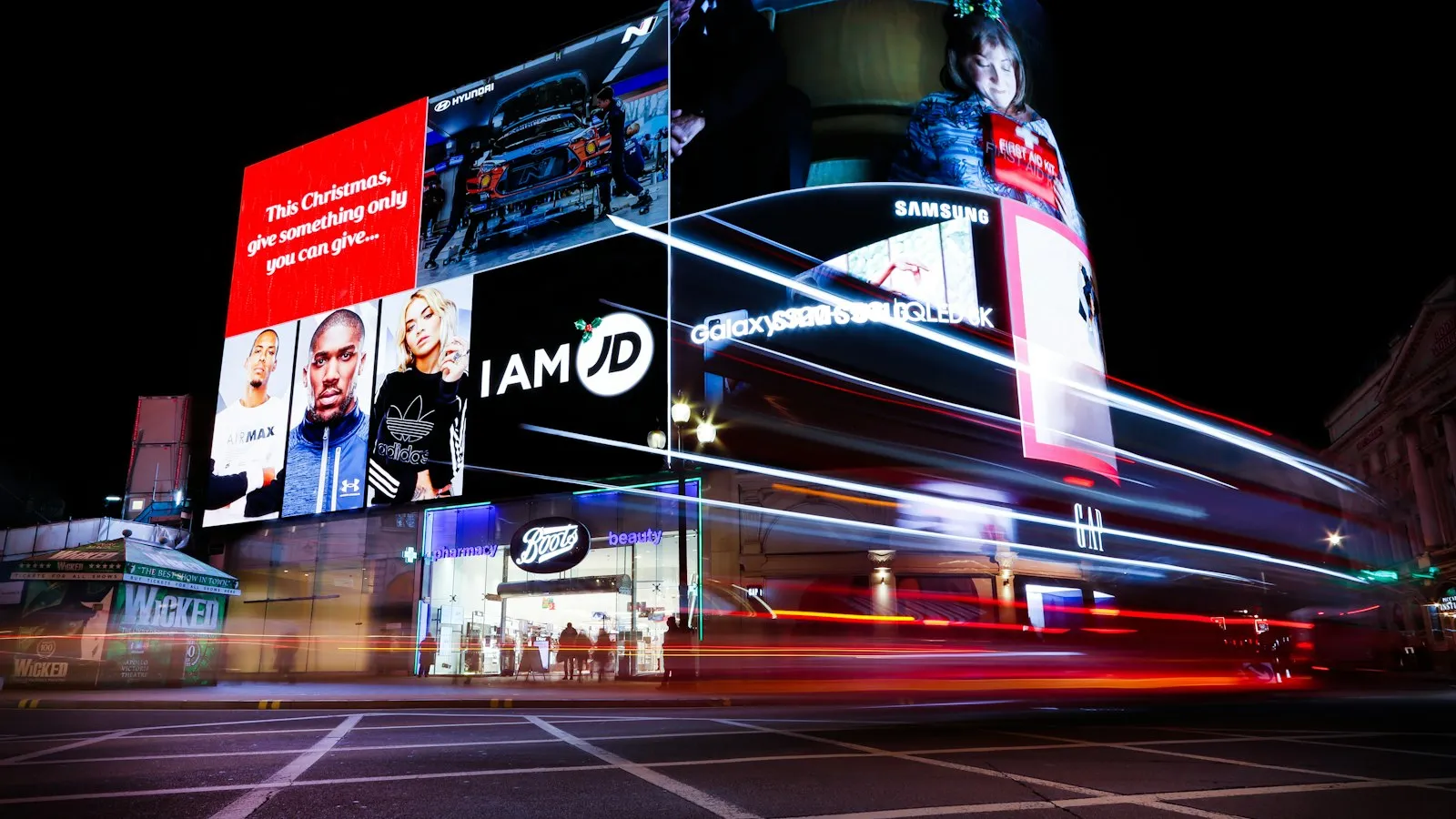
Walk through almost any city centre after dark and you will pass a wall of light: screens stacked on top of each other, each one cycling through ads for sneakers, phones, a Christmas campaign. It looks like it has always looked. What changed is what decides which ad you see, and when: programmatic DOOH now bids on each slot in real time, the same way the rest of the internet is bought.
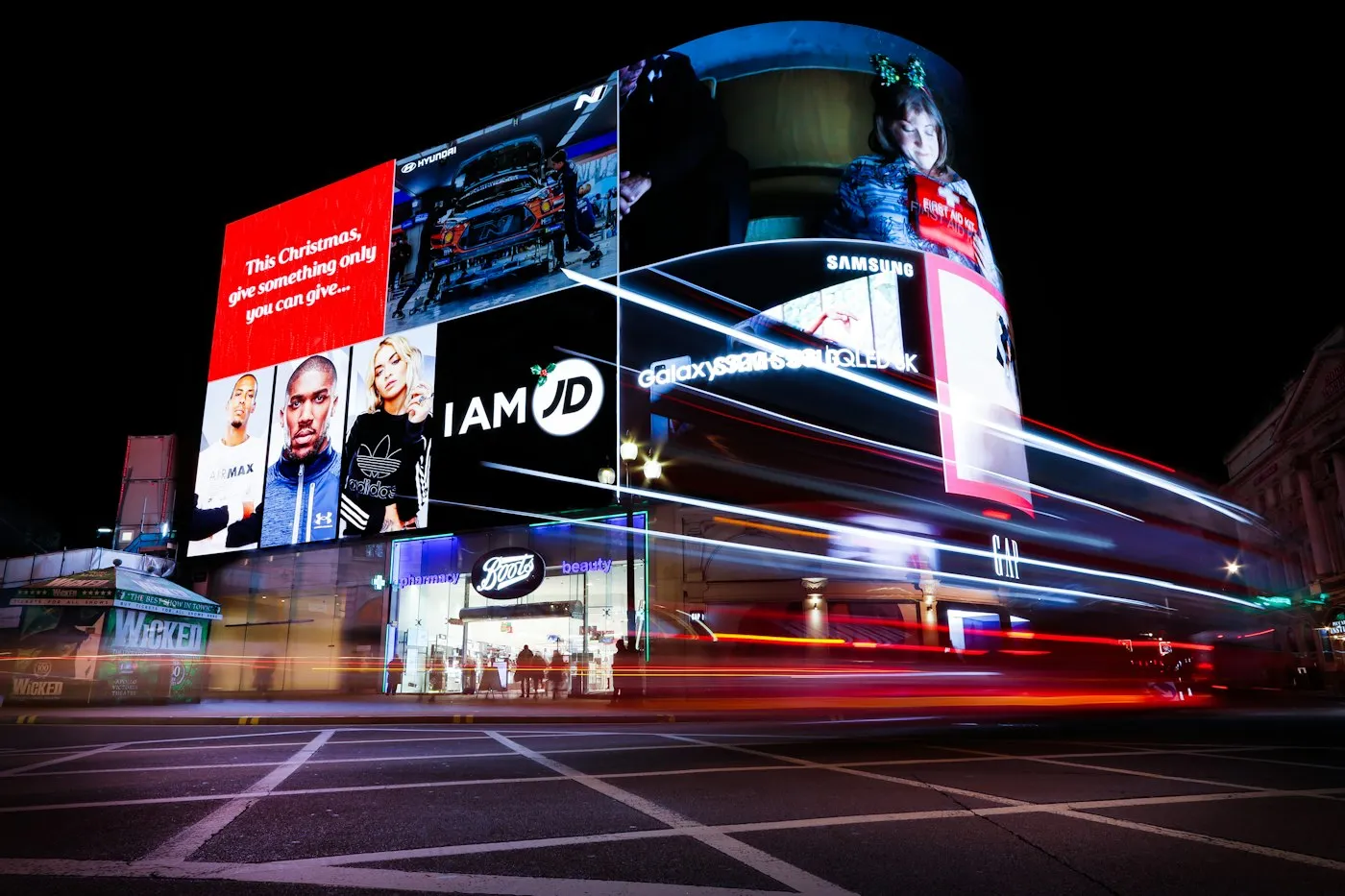
These screens are not running a fixed loop anymore. Many of them are sold slot by slot, in real time.
From painted boards to bidding screens
Out-of-home advertising, billboards, transit panels, signage in shops and stadiums, is one of the oldest ad formats there is. Digital out-of-home (DOOH) replaced the printed poster with a screen: the same billboard, a transit panel, airport displays, street furniture, all of it digital now, and able to rotate through several ads or update content on the fly.
Programmatic DOOH (pDOOH) is the next step. It connects the people who own those screens to advertisers through the same kind of automated, data-driven pipes used for real-time bidding on a banner ad. Instead of booking a fixed four-week run months in advance, a buyer can switch a campaign on, adjust it, or pause it, almost as easily as a digital display campaign.
What actually happens behind a sold DOOH slot?
A screen showing an ad to a crowd of passers-by is a different kind of event than a banner loading on one person’s phone. One slot, many eyeballs. So instead of selling one impression at a time, pDOOH inventory is usually priced on a cost-per-thousand basis, with the thousand estimated from footfall data: how many people are likely to walk past that screen in that time window.
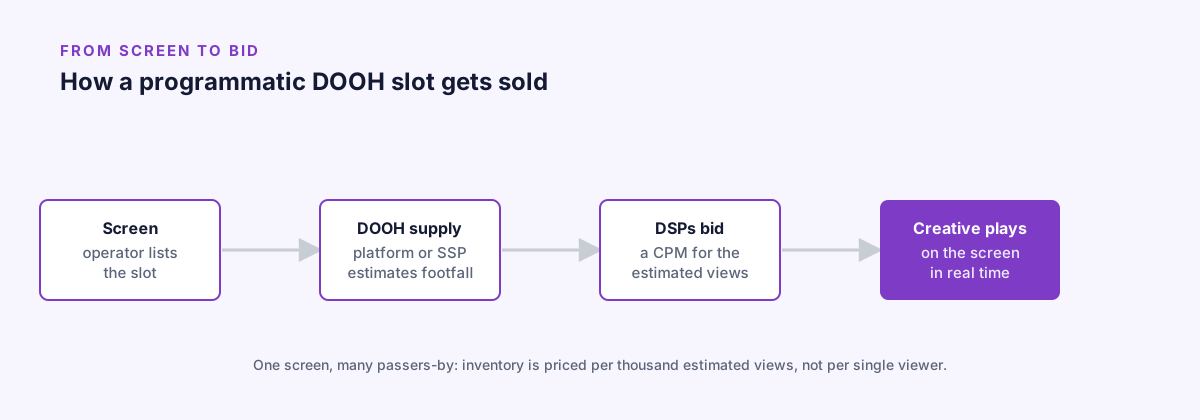
A screen operator lists a slot, the platform attaches an estimated audience to it, DSPs bid a price for those views, and the winning creative plays.
Not all of that inventory trades the same way:
- Some slots sit in a fully open auction, available to any connected DSP.
- A lot of premium inventory, the busiest corners, the biggest screens, is sold through private marketplaces or programmatic guaranteed deals.
- Screen operators often keep direct relationships with their highest-value buyers for the placements they care about most.
What makes this worth paying attention to as a local business is the flexibility it brings along with the real-time pricing. A fixed board booked months ahead cannot react to a cold snap that sends people indoors, a local event that fills a street with foot traffic, or a competitor’s sudden promotion. A programmatic screen can, because the decision to show your ad there is being made fresh for every slot rather than locked in when the contract was signed.
A single screen in a busy square does not sell one view. It sells a thousand estimated ones, priced the way digital video is priced.
How do you target which screen shows your ad?
What makes pDOOH genuinely different from a billboard booked over the phone is how precisely you can choose where and when your ad runs:
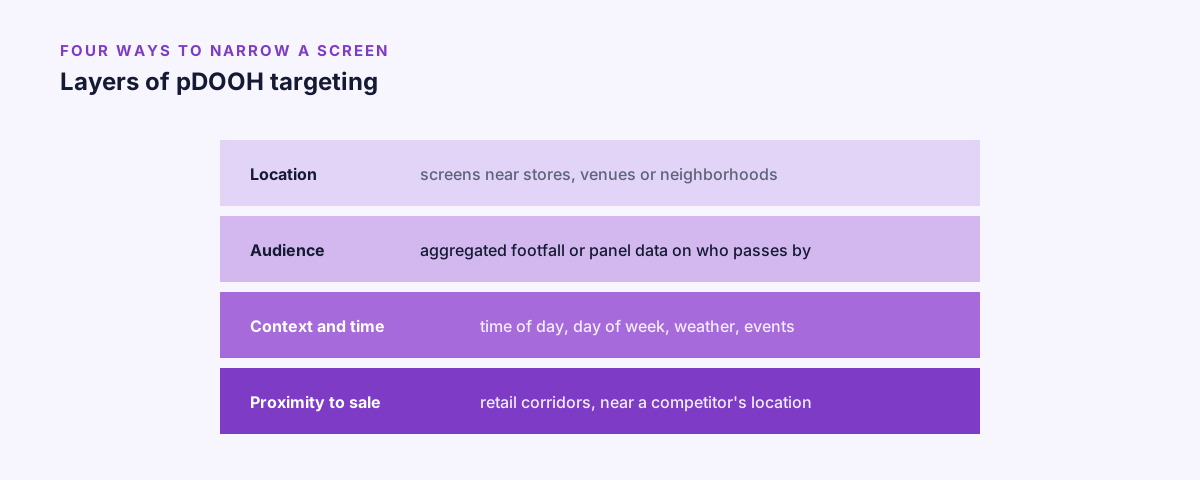
Each layer narrows the previous one: from a neighborhood down to a specific moment near a specific point of sale.
- Location: screens near a specific store, a venue, or a neighborhood rather than a whole city, often drawn using real drive-time zones rather than a flat radius.
- Audience: activating screens in places where the right kind of footfall shows up, based on aggregated, non-identifying data.
- Context and timing: running at a certain hour, a certain day, or even reacting to a trigger like weather or a sporting event.
- Proximity to the point of sale: prioritising a retail corridor, or a screen near a competitor’s storefront.
Because this data is aggregated rather than tied to an individual, it sits more comfortably with privacy rules in most markets than some digital targeting does.
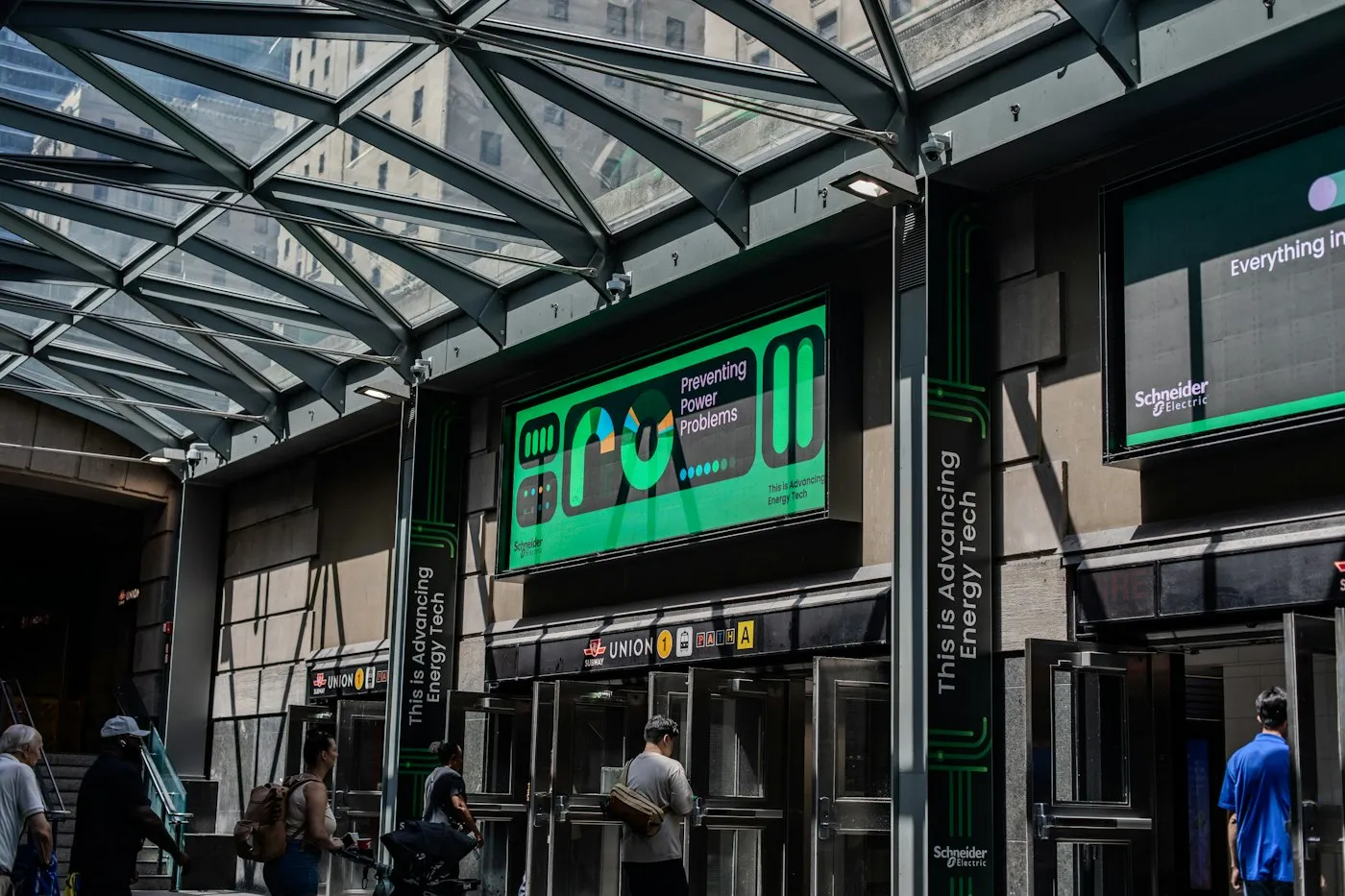
A transit screen reaches the same commuters every weekday: a very different audience pattern from a billboard on a motorway.
Designing for a glance, not a scroll
DOOH creative has to work differently from a web banner, because nobody is going to stop and read it. A few rules tend to hold:
- Short, high-contrast copy that reads at a glance, from a distance, while moving.
- No reliance on sound. Almost every screen is silent.
- A layout built for the actual screen shape, since landscape billboards, portrait transit panels and square lobby displays are not interchangeable.
- Dynamic creative that can swap in a different message depending on the time, the weather or the location.
Dynamic creative optimisation tools can automate most of that last point, serving whichever version of a creative fits the moment without anyone manually swapping files. Our guide to dynamic creative optimisation covers how that works in more detail.
How do you measure if programmatic DOOH worked?
Measuring pDOOH does not look like measuring a click-based channel, because there is no click. The industry leans on a few other signals instead:
- Footfall studies, comparing store visits between people who were exposed to a screen and people who were not.
- Brand lift studies, usually survey-based, tracking whether awareness or intent moved.
- Mobile retargeting, identifying devices that were near a screen and watching what they did online afterward.
- Sales correlation, especially for retailers who can tie a spike to a specific location and time window.
FAQ
Is programmatic DOOH the same as digital out-of-home?
No. Digital out-of-home (DOOH) describes any digital screen used for advertising. Programmatic DOOH describes the automated, auction-based way that screen time gets bought and sold, rather than the screen itself.
How is a DOOH impression counted if nobody clicks?
Instead of a click, pDOOH prices on an estimated cost-per-thousand, with the thousand based on footfall data: how many people are likely to pass the screen in that time window.
Can a small, local advertiser access premium DOOH screens?
Yes, through an open auction or a private marketplace deal, though the busiest, most in-demand screens are more often sold through programmatic guaranteed deals that favour committed buyers.
Does programmatic DOOH make sense for a single store?
Yes. Because pDOOH is bought screen by screen, a single store can target just the handful of screens in its own catchment area, without needing a city-wide or national budget.
How Arago helps
Today, Arago gives local retailers display and interactive rich media targeted to their own stores, with zones drawn in Map using real drive-time areas rather than a flat radius, and the whole thing runs with no contract and no minimum spend. Programmatic DOOH is on the roadmap, so a screen near the shop will eventually sit alongside those same digital line items.