
Imagine paying full price for a jacket, not knowing it already passed through two resellers who each took a cut before it reached the shop. You would want to know, and you would probably shop somewhere shorter next time. In programmatic advertising, the same thing happens to a dollar of ad spend, except the resellers are supply-side platforms, or SSPs, and most buyers never see the route their money actually took.
Supply path optimization, SPO for short, is the practice of finding out, and then choosing a shorter route.
A publisher can be reachable a dozen different ways
Here is the part that surprises people: the exact same impression, on the exact same page, can often be bought through more than one SSP. Publishers connect to dozens of them to maximize competition for their inventory, and each SSP resells the same impressions to DSPs, often with its own fees and its own auction quirks layered on top.

Multiple ramps leading to the same destination: a familiar picture for anyone who has traced where ad spend actually goes.
The result looks a lot like that interchange above: many ramps, one destination, and no obvious reason to prefer one route over another unless you actually measure them. When the same impression gets offered to buyers through several different paths, it is sometimes called a duplicate auction. It wastes bidding resources on both sides, and it makes two things harder than they should be: capping how often one person sees the same ad, and knowing how many actual people a campaign reached.
What a shorter path actually buys you
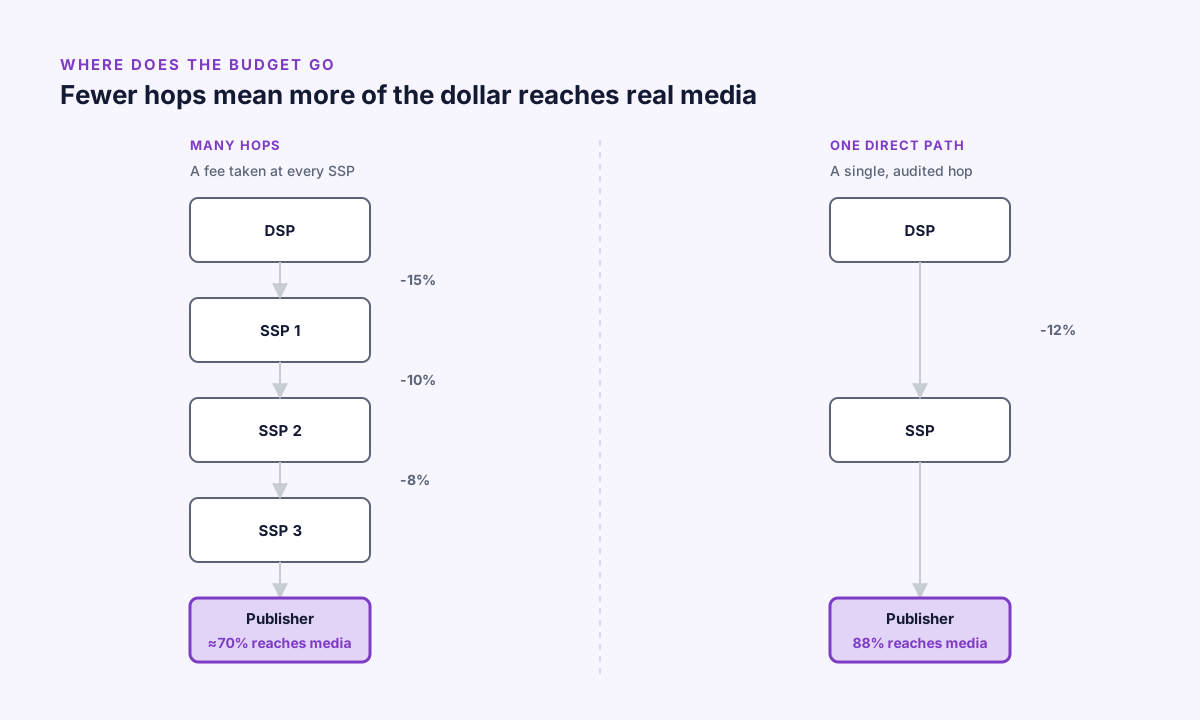
Each hop takes a fee. Fewer hops means more of the budget survives the trip.
Every intermediary between a DSP and a publisher takes a fee. That is not a scandal, it is how the infrastructure gets paid, but it adds up fast. A dollar that passes through three SSPs before reaching the publisher can lose a very different share of its value than one that travels a single, direct, auditable connection. Industry tools like sellers.json and the SupplyChain Object exist specifically so buyers can see who took a cut along the way.
You cannot optimize a path you cannot see. Most of SPO is just turning the lights on.
Fees are only part of the story. Two paths to the same domain do not always carry the same quality of traffic: one SSP might filter fraud more aggressively, enforce stricter viewability standards, or apply tighter brand safety checks than another selling the identical inventory. Add in the fact that different SSPs run different auction types and set different floors, and the picture gets complicated enough that “just connect to everything” stops being a reasonable strategy. Latency matters too. The real-time bidding auctions behind every impression run in well under a second, and a slow supply path simply arrives too late to compete, wasting the connection for everyone involved. Trimming the number of active SSP connections tends to shrink that bid stream too, which lowers infrastructure costs on both the buying and the selling side.
How buyers actually do this
SPO is not a setting you configure once. In practice, it looks like ongoing review: buyers watch delivery data across SSPs to see which paths are actually responsible for the impressions that perform, and quietly deprioritize the ones that generate high fees, duplicate traffic, or low win rates without much to show for it. For a local advertiser, that review usually comes down to a simple question asked over and over: of the money spent this week, how much actually reached a real screen in the trade area that mattered.
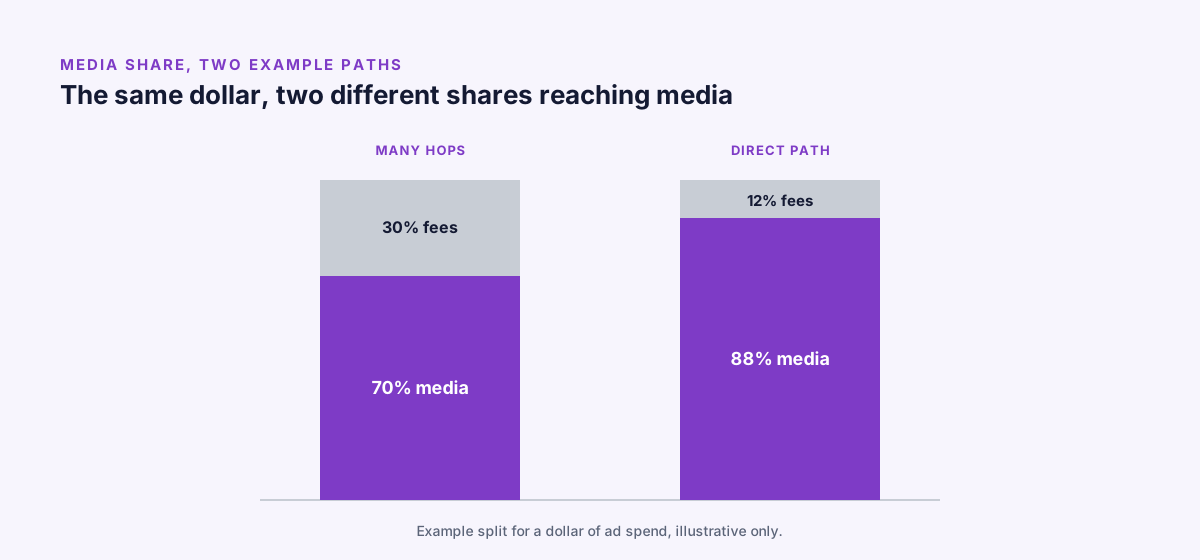
An illustrative split of one dollar of spend: more hops, less reaches the actual media.

Every handoff in a supply chain, digital or physical, adds a cost before the goods, or the ad, actually arrive.
Some DSPs go further and negotiate direct relationships with a smaller set of SSPs, trading committed spend for lower fees. These curated paths increasingly blur the line between plain open-auction buying and a private marketplace deal. Publishers can play their part too, trimming the number of SSPs they work with down to the ones with transparent fees and strong buyer relationships.
Knowing it is working
A few signals tend to show up when SPO is paying off: a higher share of spend reaching working media, fewer duplicate impressions showing up in reach and frequency reports, steadier viewability and brand safety scores without CPMs climbing, and faster average response times across the bid stream. None of these show up overnight, and none of them show up at all if nobody is looking.
None of this is a one-time fix. New SSPs appear, publisher setups change, and a path that was efficient six months ago can quietly stop being one. Buyers who treat SPO as a habit rather than a project tend to see the gains compound.
FAQ
Is SPO the same as header bidding?
No. Header bidding is a publisher-side technique for running simultaneous auctions across demand sources. SPO is the buyer-side practice of deciding which of those resulting paths to actually use.
Does SPO guarantee a lower price?
Not directly. It aims to cut wasted fees and duplicate auctions so more of a budget reaches working media, but the winning bid itself still depends on competition.
Who is responsible for SPO, the DSP or the buyer?
Both. A DSP can surface delivery data broken down by path, but a buyer or its agency still decides which paths to prioritize or drop.
How often should a buyer review its supply paths?
Regularly, not once. New SSPs appear and publisher setups change, so a path that was efficient six months ago can quietly stop being one.
How Arago helps
Arago routes campaigns through a curated set of supply partners rather than connecting to everything available, so local retailers get a clear view of where their budget is actually going instead of a black box. The same DSP that handles this routing also runs the auction itself, zone targeting through Map, and creative delivery, all without a contract or a minimum spend, so maximizing the share of a budget that reaches real audiences does not require hiring a trading desk.