There is a small boutique two streets from the train station that does not put its best pieces in the window. Those live in the back, and you only get shown them if the owner already knows you, or someone vouches for you. Nothing about that is unfair, and it is not really about scarcity either. It is just a different way of selling than a shop that lets anyone wander in and grab whatever is on the rack.
Private marketplaces work the same way, except the back room is digital and the introduction is a string of characters called a deal ID.
Not every impression is up for grabs to everyone
Open auctions let any accredited buyer bid on any available impression. It is efficient and it scales, but a publisher gives up a lot of control over who shows up and what they pay for the privilege. A private marketplace, or PMP, flips that: the publisher invites a specific set of buyers to bid on a specific package of inventory, at a negotiated floor, while the auction mechanics underneath stay exactly as automated as the open exchange.

How a deal ID actually opens the door
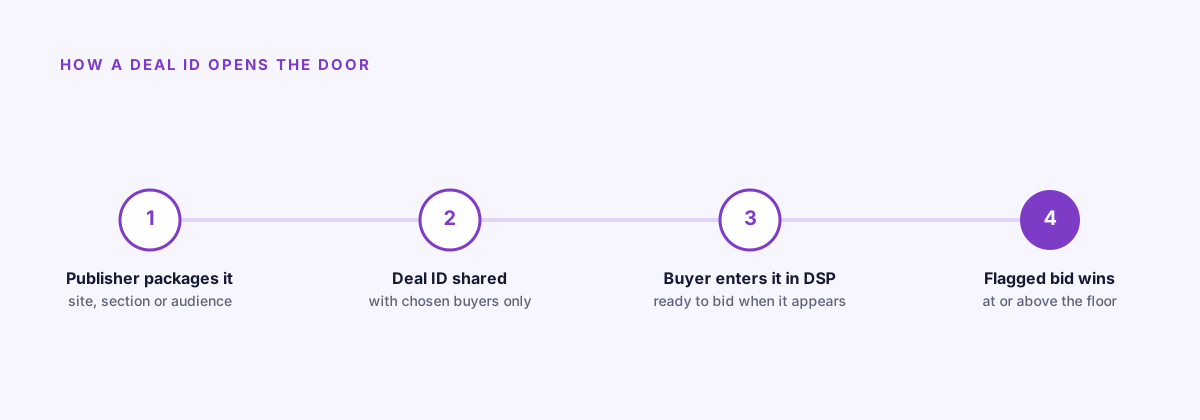
The same auction mechanics as the open exchange, restricted to an invited list.
A publisher packages a slice of its inventory, by site, section, audience or format, and decides who gets to see it. That buyer, or their agency, receives a deal ID: a unique string that gets typed into a DSP. From that point on, whenever an eligible impression becomes available, the bid request arrives flagged with that ID, and the buyer can bid at or above whatever floor the publisher set. Everything after the invitation runs exactly like a regular auction. The only thing that changed is who is allowed in the room.
An open auction sells to whoever shows up. A PMP decides who gets invited first.
Why this is worth the trade-off
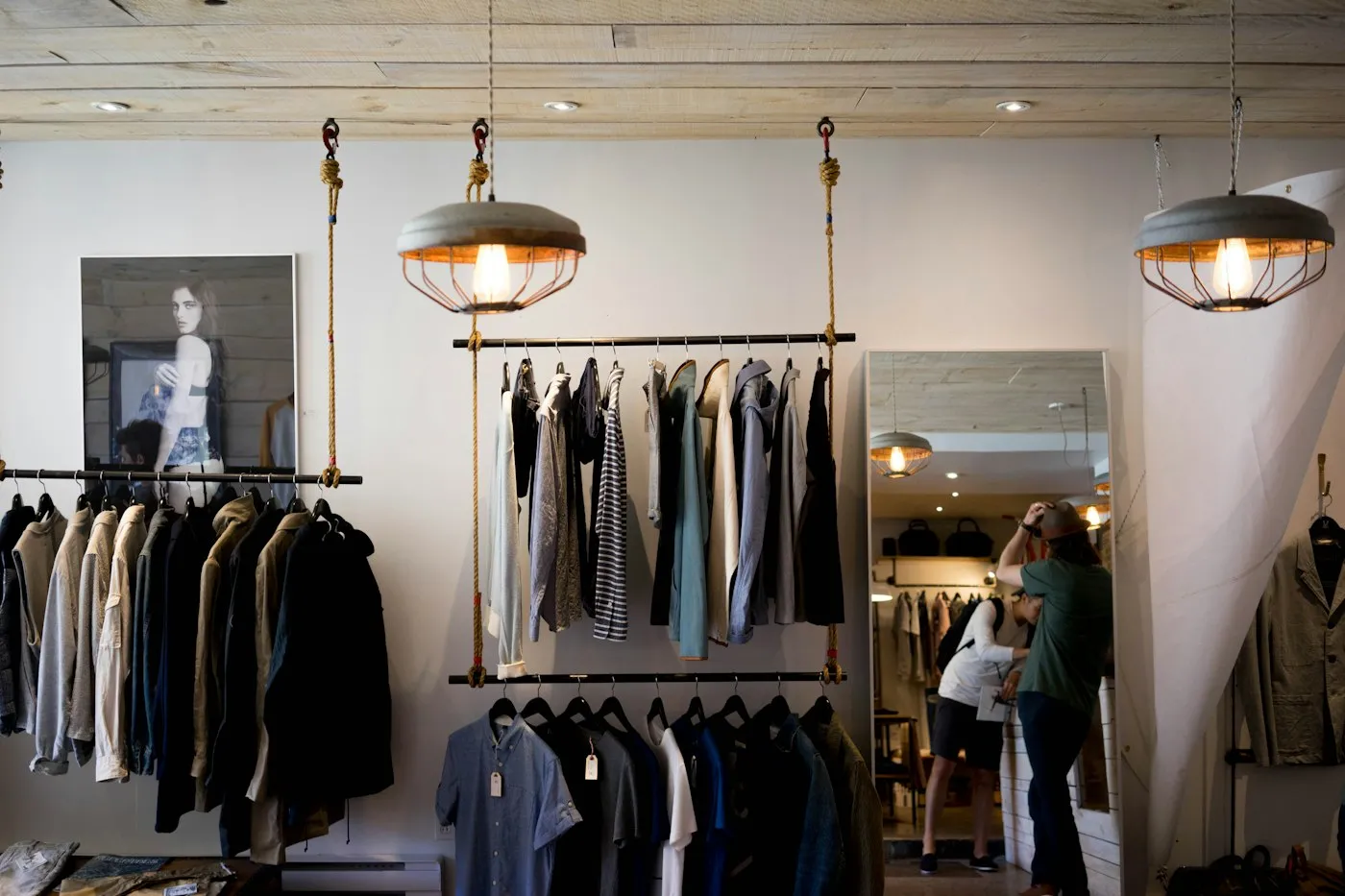
A curated selection, shown to a smaller audience, at a higher confidence of quality.
Buyers show up for a handful of reasons. Open exchange inventory can include placements nobody would choose deliberately, and a PMP lets a buyer source from publishers they have already vetted, the same discipline behind supply path optimization, reducing but never fully eliminating the risk of showing up next to the wrong content. It also fixes the usual problem of buying blind: in a PMP, a buyer typically knows exactly whose inventory they are getting, sometimes down to the section or format, instead of hoping the exchange’s quality filters caught everything. Some publishers bundle their own first-party audience data into the package too, a news site offering a “business traveler” segment or a “home improvement” audience built from its own readers’ declared or inferred interests, for instance. And in a preferred deal, a specific variant of a PMP, the buyer gets first look at premium placements, like a homepage takeover, before they ever reach an auction.
Publishers have their own reasons to run this way. It protects premium inventory from being commoditized at open-auction prices, builds a direct relationship with advertisers they want to keep, and turns first-party data into revenue without handing it to just anyone. The net effect for most publishers is a higher effective CPM than the open exchange typically delivers.
Where Programmatic Guaranteed fits
Push the PMP model one step further and the auction disappears entirely. In Programmatic Guaranteed, a buyer and publisher agree on a fixed volume and a fixed price in advance, and the buyer wins every eligible impression, no bidding involved. It sits at the far end of a spectrum that starts at the open auction, passes through PMPs and preferred deals, and ends with that reservation. Moving along that spectrum generally means trading some flexibility for more certainty: the open auction is the easiest to adjust mid-flight, while a guaranteed deal locks in terms that take a real conversation with the publisher to change.
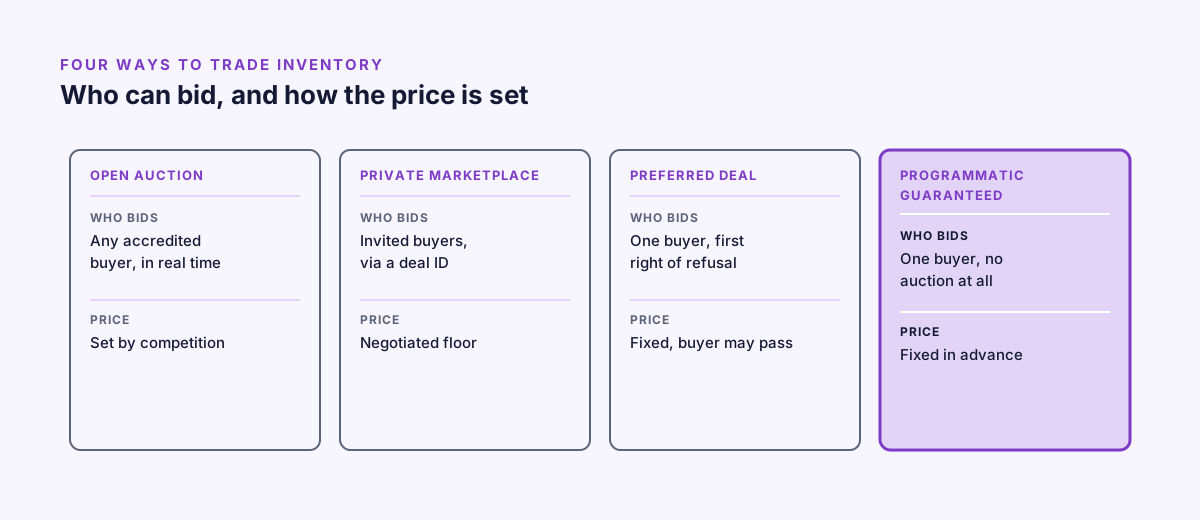
The same inventory, four different ways to trade it, from anyone bidding to one buyer reserving it outright.
Where deals usually break
Setting up a deal adds real operational weight, and most of the friction shows up in predictable places: a deal ID that never got activated correctly on the DSP side, a floor set above what the buyer is actually willing to pay, a package that quietly under-delivers its promised volume, or impression counts that do not match between the publisher and the buyer’s own reporting. None of these are exotic failures. They are just the kind of thing that close communication between both sides, or a platform that manages both, tends to catch early, usually before a single flight has run its full course.
FAQ
How is a PMP different from an open auction?
In an open auction, any accredited buyer can bid on any available impression. In a PMP, a publisher invites a specific set of buyers to bid on a specific package of inventory at a negotiated floor.
What is a deal ID?
It is a unique string a publisher gives an invited buyer. The buyer enters it into their DSP, and matching bid requests then arrive flagged with that ID.
Is a preferred deal the same as a PMP?
A preferred deal is a variant of a PMP where the buyer gets first look at premium placements before they ever reach an auction, rather than bidding alongside other invited buyers.
Do PMPs cost more than the open auction?
Usually yes. Publishers typically charge a higher effective CPM in exchange for the curation and transparency a PMP offers.
How Arago helps
Arago lets local retailers and regional advertisers add a deal ID they have negotiated with a publisher or SSP to a line item, alongside open-exchange buying with the usual per-line-item allow and block lists: Arago does not curate or sell deal packages itself. It runs through the same DSP used for every other campaign, free of contracts or minimum spend, with the same per-location setup through multi-local line items, the same allow and block lists per line item, and the same reporting on impressions, clicks and viewable CPM, whether the traffic came from an open auction or a negotiated deal.