You are on a train platform, thumb scrolling a news app while you wait. An article loads, and for a fraction of a second the banner above the headline sits blank. Then a pair of running shoes appears. You never see what just happened, but in that blink, a complete auction ran from start to finish, and a shoe brand won your screen.
That auction happened on an ad exchange.
What an ad exchange actually is
An ad exchange is the marketplace where that auction takes place: a piece of infrastructure that connects publishers who have ad space to sell with advertisers who want to buy it, and settles the sale through a bid, not a phone call. Unlike a traditional deal where a salesperson negotiates a price, an exchange opens every available ad slot to many buyers at once and lets the highest valid bid win.
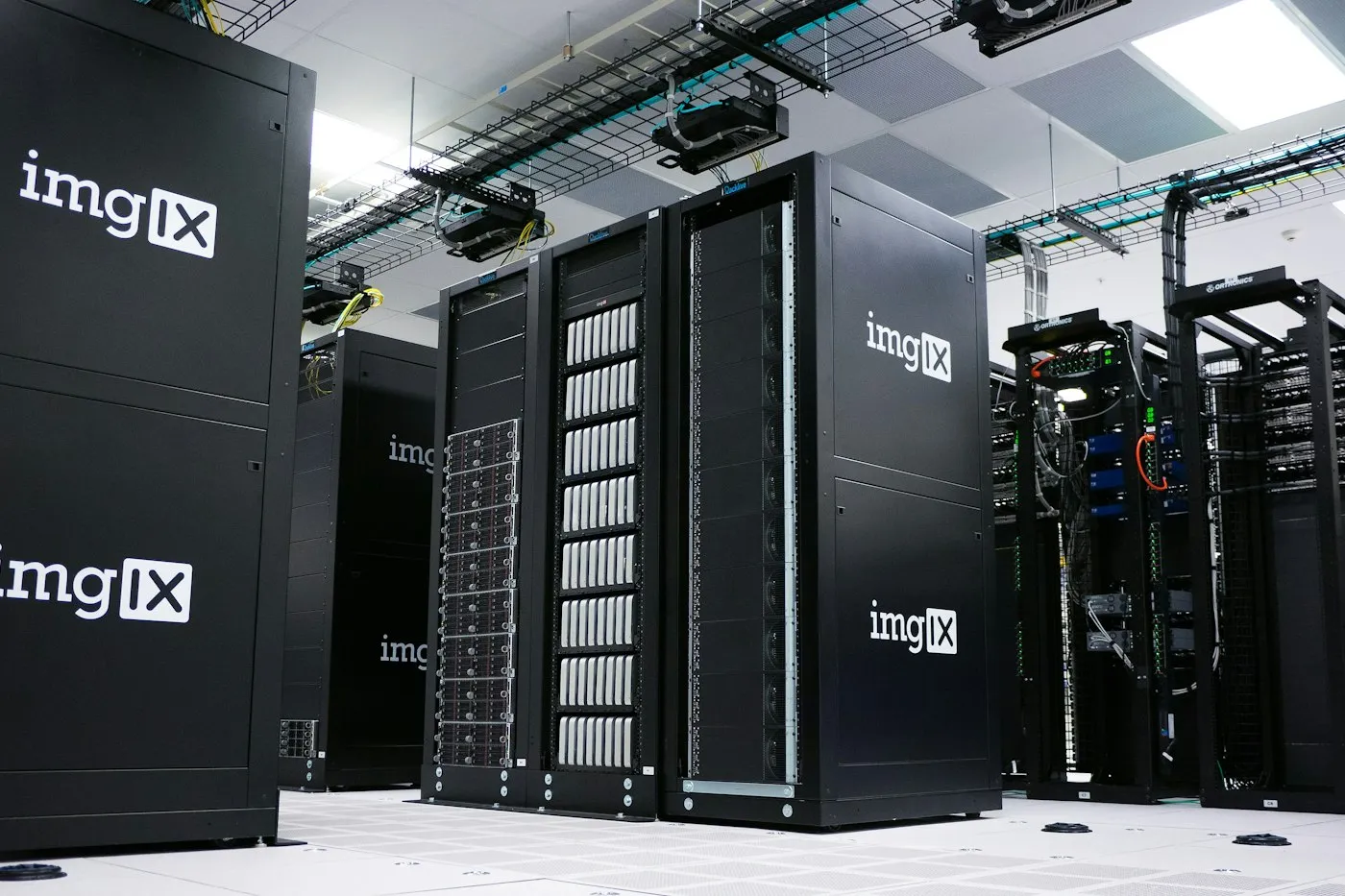
Behind the auction: racks of servers running real-time bidding, around the clock, on every continent.
Behind the scenes, this runs on real-time bidding (RTB): hardware built to resolve an auction while a page is still loading, usually in under 100 milliseconds. That photo above is not decoration. It is roughly what makes the shoe ad possible: thousands of machines doing one small job, over and over, billions of times a day.
Five steps, one hundred milliseconds
Nothing about that blink is magic. It is five steps, each one handed off to the next system the instant it finishes.
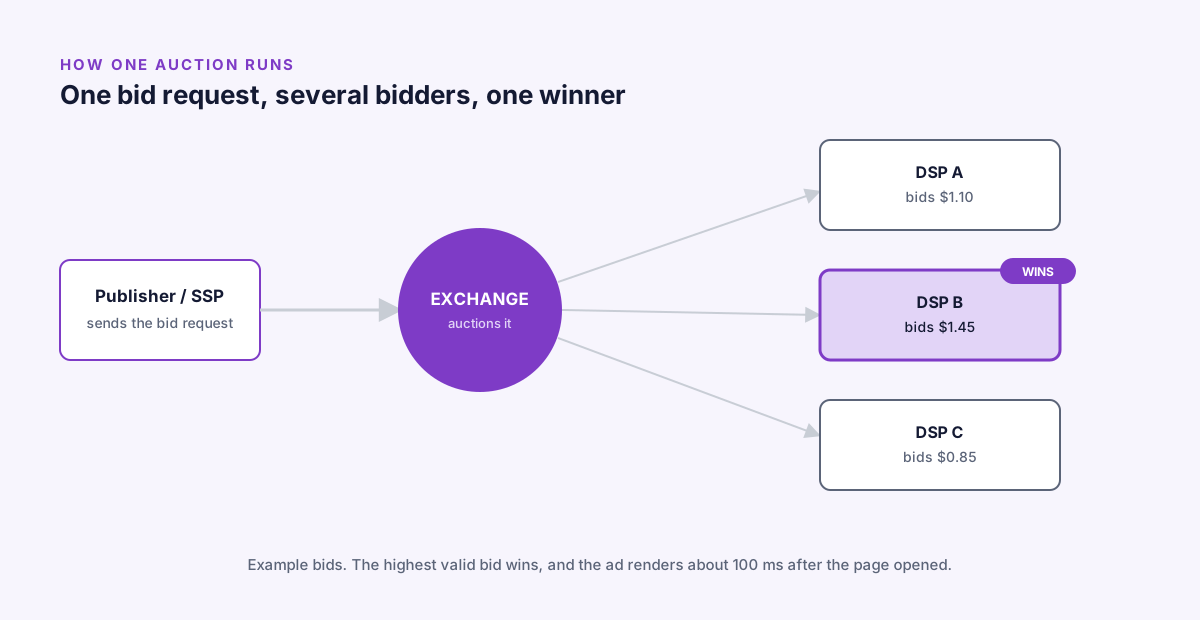
One bid request goes out, several DSPs answer, and the highest valid bid wins the impression.
The page opens and a slot needs an ad. The publisher’s ad server sends a bid request to the exchange describing the opportunity: ad size, page context, device, rough location, never a name. The exchange forwards that request to every connected DSP. Each DSP checks the request against its live campaigns and answers with a price, or stays silent. The exchange compares every bid it receives and declares a winner. The winning ad is handed back and rendered on the screen.
An exchange does not pick a favorite. It just reports who was already willing to pay the most.
First price, second price, and the floor
How the winning price is actually charged has changed over the years. Most exchanges today run first-price auctions: the winner pays exactly what they bid, which means overbidding is a real cost, not a rounding error. Second-price auctions, where the winner paid one cent more than the runner-up, used to be the default and still show up in a few places.
Publishers can also set a floor: a price below which they will not sell a slot, whether to everyone or to one buyer in particular. A floor protects the value of the inventory, but set it too high and the slot simply goes unsold.
For a buyer, the floor is one more number to watch: bid under it and you simply lose the slot, no matter how well you targeted it. That is why serious buyers track floors the way a shopper tracks prices, not as a one-time setting but as something to revisit as the market moves.
Three lanes to the same inventory
Not every impression is sold the same way. Picture three lanes, from the most open to the most reserved.
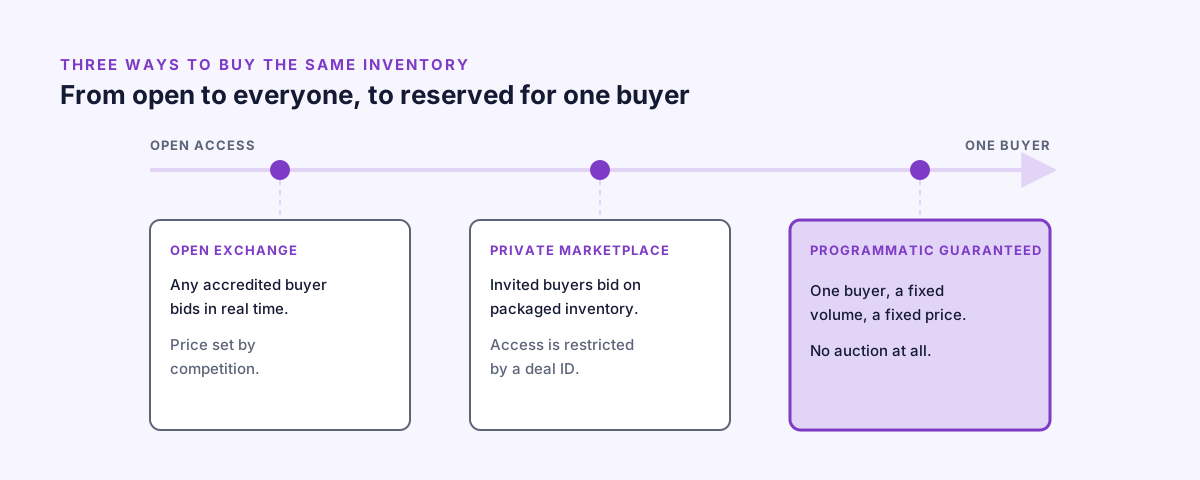
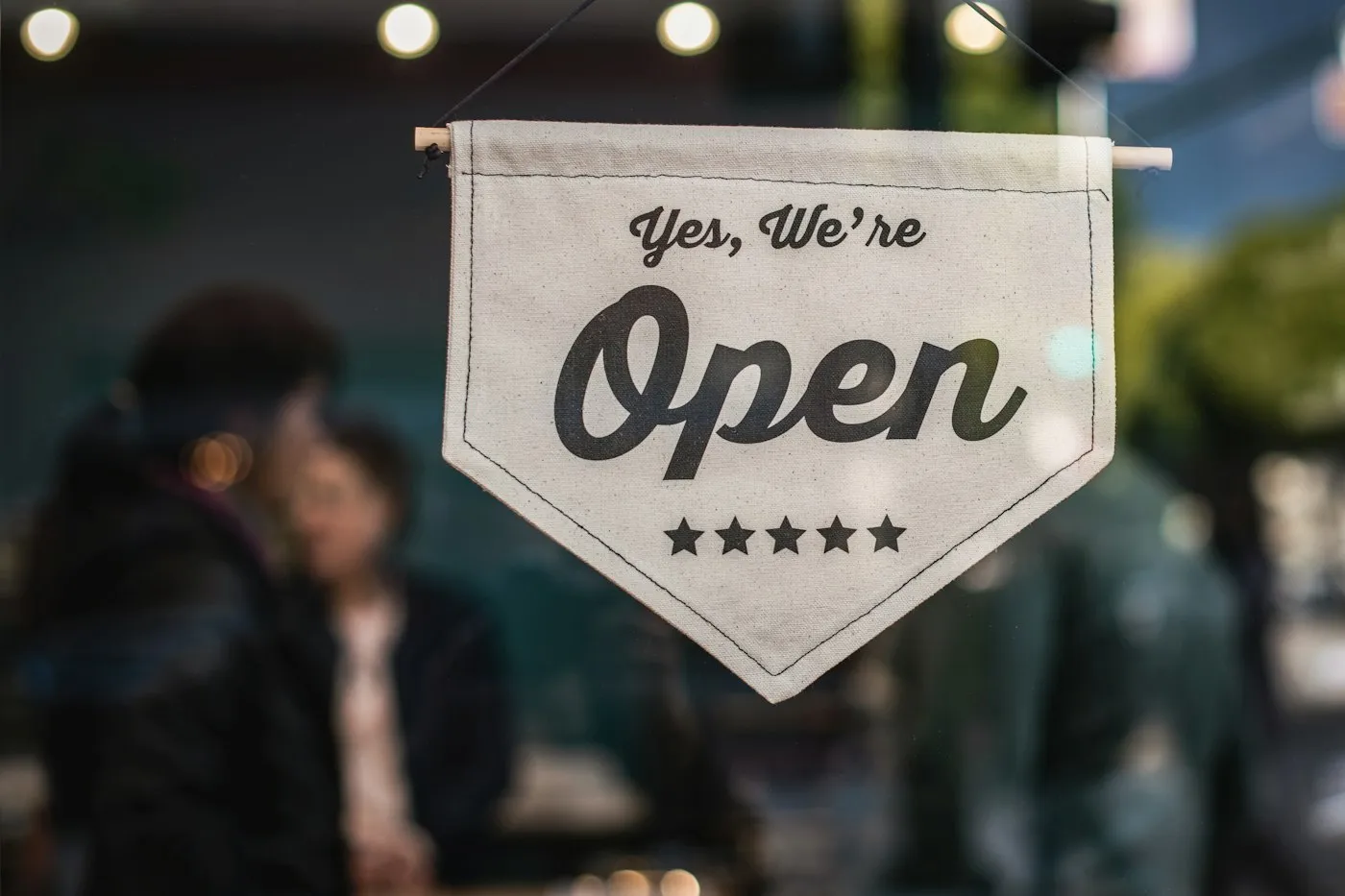
The open exchange lane: no invitation needed, any accredited buyer can bid.
The open exchange is that sign in the window: anyone accredited can walk in and bid, which is exactly why it offers the most scale and the widest range of quality. A private marketplace narrows the room to a guest list, trading some scale for more predictable placements. Programmatic Guaranteed skips the auction altogether: a buyer and a publisher agree on a volume and a price in advance, and the exchange simply delivers on that promise.
In practice, a buyer rarely lives in just one lane. A brand testing a new city might stay almost entirely on the open exchange, where reach is cheap and plentiful. A retailer who cares about exactly which app or site shows its ad will push more budget into private marketplaces. A campaign tied to a fixed date, like a store opening, is where guaranteed deals earn their keep.
Exchanges are not networks
The two get confused constantly, and it is worth untangling. An ad network buys up inventory from publishers and resells it to advertisers, usually bundled, with the network setting its own markup along the way. An exchange is closer to a stock market than a reseller: buyers and sellers meet directly, and the price comes from the auction, not from a middleman’s price list. In practice, plenty of networks now run exchange-like products too, so the line has blurred, but the distinction between “bundled reseller” and “open marketplace” is still the useful one to keep in mind.
Who is actually in the room
A single auction involves more participants than the five steps let on:
- Publishers and SSPs put inventory up for sale
- DSPs represent advertisers and place the bids
- Data providers add context or audience signals to the bid request
- Verification vendors score the slot for brand safety, viewability and fraud before anyone trusts the impression
Much of today’s exchange volume arrives through header bidding wrappers or unified auction integrations, rather than a single direct call from the publisher’s ad server.
FAQ
Is an ad exchange the same thing as a DSP or an SSP?
No. A DSP represents the buyer and places bids, an SSP represents the publisher and offers inventory, and the ad exchange sits between them, running the auction that connects the two.
What happens to a losing bid in an ad exchange auction?
Nothing is charged and nothing is logged against the buyer beyond the attempt itself. The exchange simply moves on to declare the highest valid bid the winner, and every other bid is discarded for that impression.
Can a small or local advertiser buy directly on an open ad exchange?
In practice almost all advertisers reach the open exchange through a DSP rather than connecting to it directly, since the DSP handles accreditation, bidding infrastructure and real-time decisioning on the advertiser’s behalf.
Why do some ad exchanges use first-price auctions and others second-price?
The industry shifted toward first-price auctions for more transparent, predictable pricing, since the winner pays exactly their bid rather than a price shaped by bid-shading guesses. A handful of exchanges and deal types still use second-price mechanics.
How Arago helps
Arago’s DSP connects to the open internet through real-time bidding over OpenRTB, on both websites and mobile apps, so a local retailer can bid in that same hundred-millisecond auction without building any of the plumbing described above. There is no contract and no minimum spend: you only fund the campaigns you run, with pricing that stays simple whether you are launching three line items or a hundred and twenty, one per store.