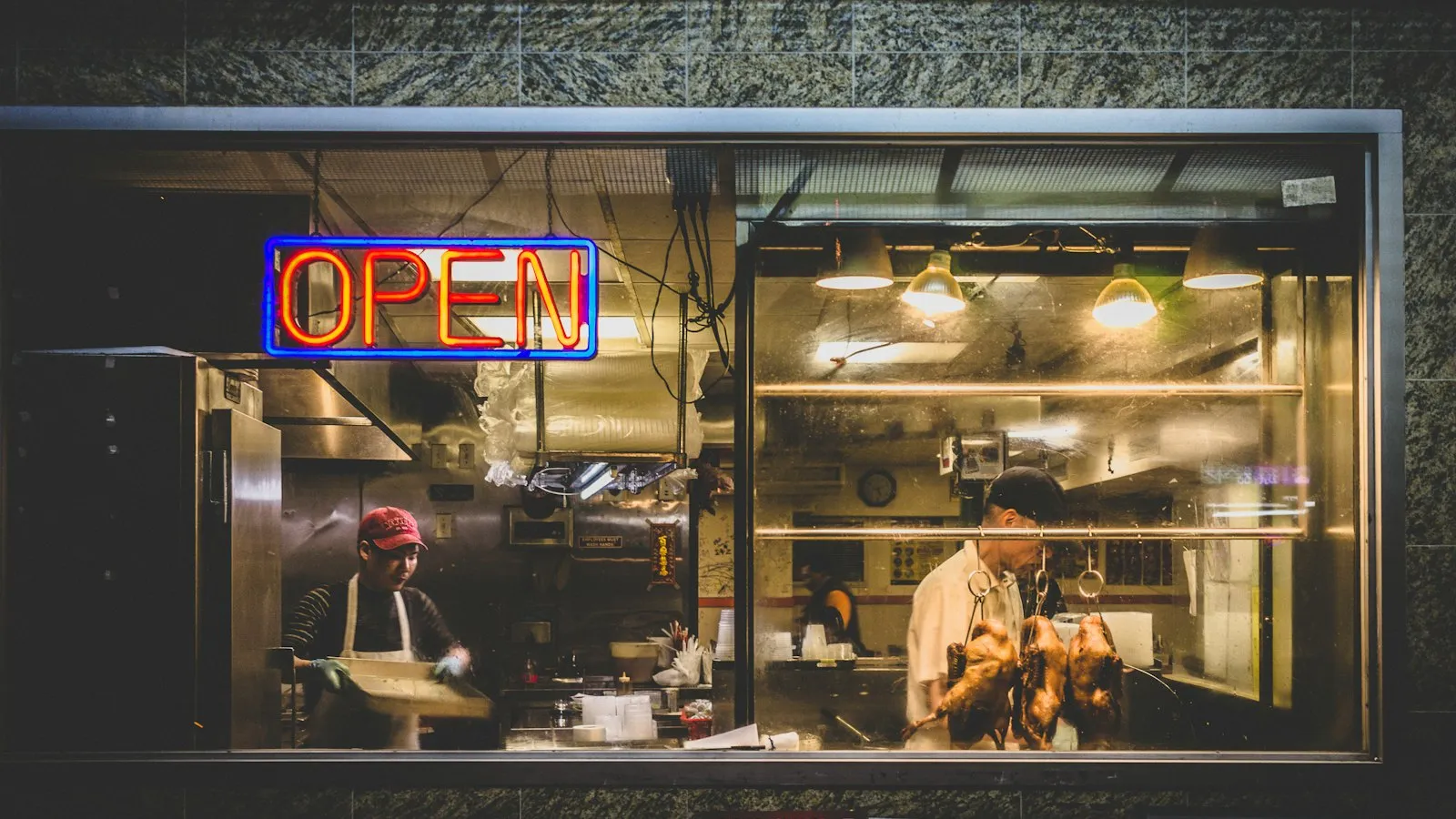
Think about the last pastry shop counter you walked past. You probably did not read a single price tag. But if one cake sat under a little glass dome, you might have slowed down, just a little, to see what was inside.
That small pause, and why interactive ads are so good at creating it, is what this article is about.
Why do we filter out ads without even noticing?
Most of us scroll past hundreds of ads a day, and we remember almost none of them. Not because they are badly made, but because our brains have learned a useful trick. Anything shaped like an ad, sitting where ads usually sit, gets filtered out before we consciously notice it.
Researchers call it banner blindness. Everyone else calls it Tuesday.
For a long time the industry’s answer was to shout louder: bigger formats, brighter colours, more motion. It worked for a while, and then it mostly made people install ad blockers.
You cannot out-shout a filter. You can only give people a reason to switch it off for a moment.
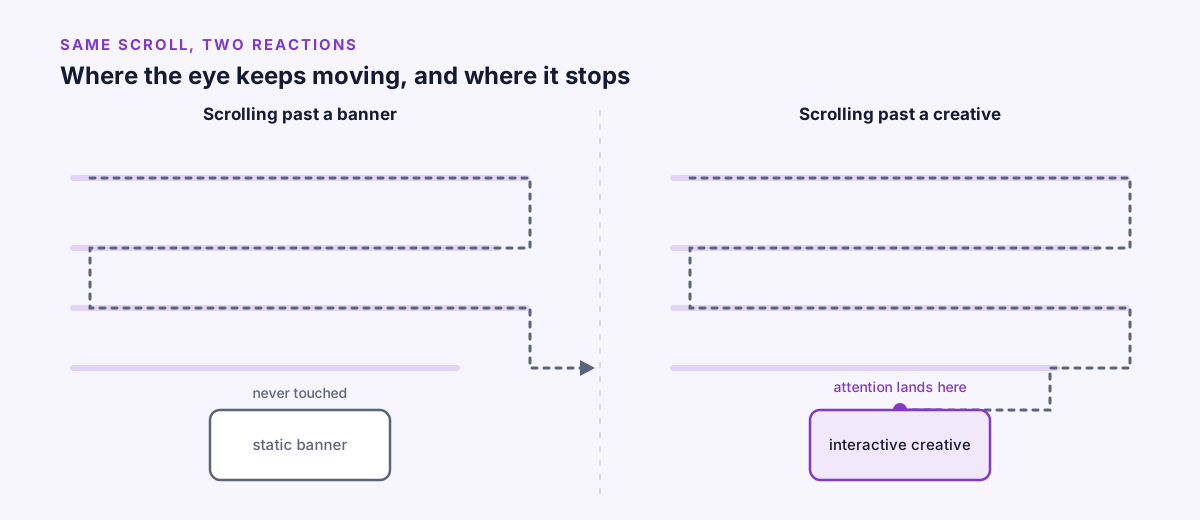
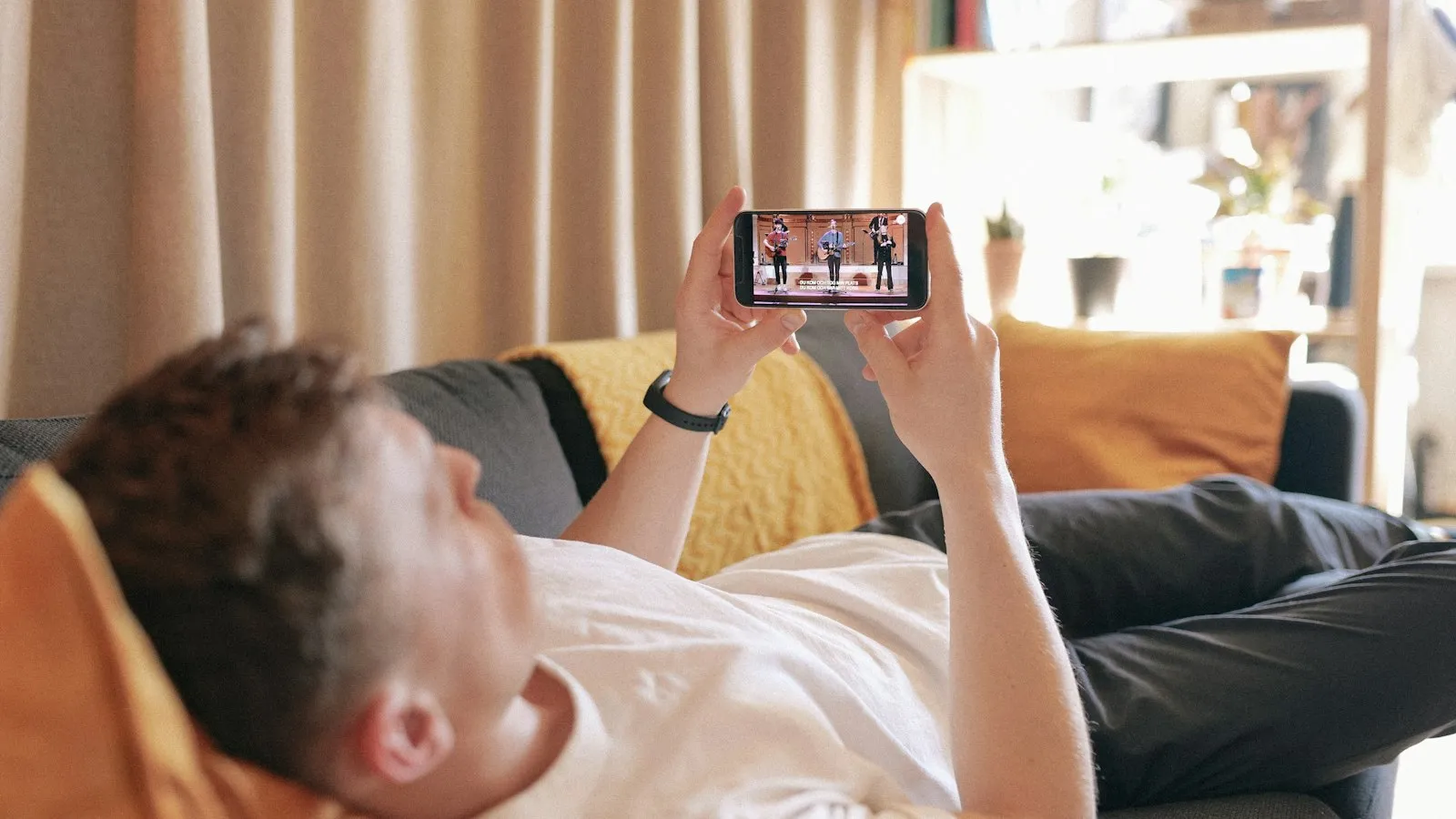
Same scroll, same page. The banner gets ignored, the creative gets a reaction.
Curiosity is a stronger pull than attention
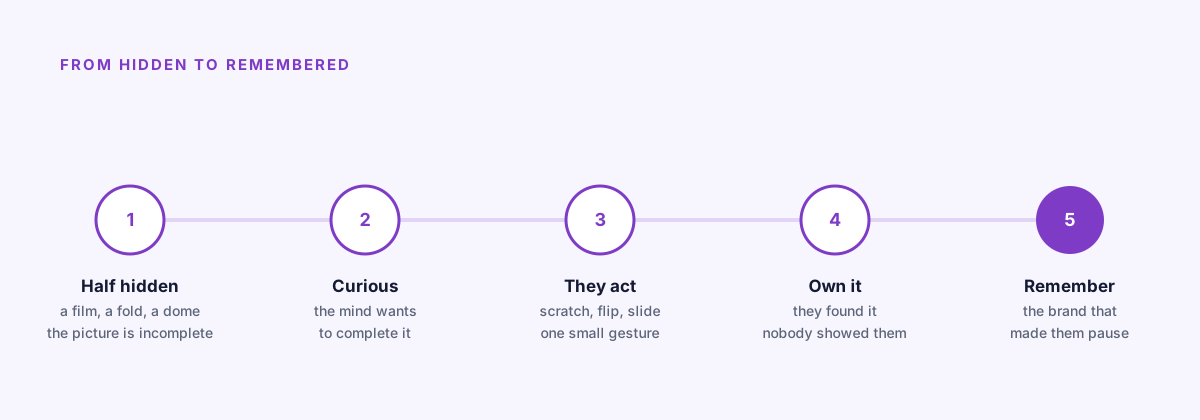
There is a simple reason a half-hidden thing is more interesting than a fully visible one. When we see part of something, our mind wants to complete the picture. A covered product, a folded card, a closed box: each one opens a tiny question that we feel a need to answer.
That is the whole idea behind a scratch card. Nobody is impressed by a grey rectangle. What pulls the thumb in is the feeling that something is underneath.
Touching is believing
There is a second, quieter force at work. When people physically do something, they feel more connected to the result.
You have felt this yourself. A meal you cooked tastes better than the same meal ordered in. Flat-pack furniture you assembled feels more yours than the one that arrived ready-made. Doing creates a sense of ownership.
A playable ad borrows a tiny version of that feeling. When you drag your thumb and a product appears, you did that. It is a small act, but it changes the relationship. You are no longer being shown something. You discovered it. Our piece on building a playable rich media ad goes into the engineering behind that small moment.
Why does giving control back make an ad less annoying?
The ads people dislike most share one trait: they take control away. The video that plays with sound. The pop-up that covers what you were reading. The countdown before you can skip.
Interactive formats flip that around. Nothing happens unless you choose. If you scroll on, the ad simply sits there, quiet and still. If you are curious, it rewards you.
Play is short, and that is fine
Nobody wants a game inside an ad. The best interactions last a few seconds:
- Scratch to uncover an offer.
- Flip a card to see the other side of a product.
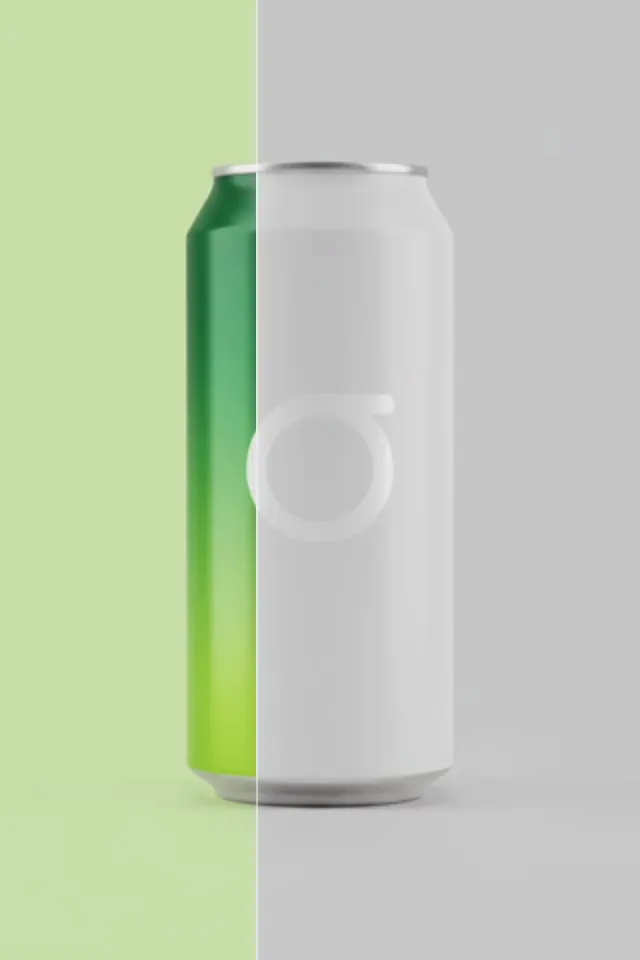
- Slide to compare before and after.
- Swipe through a small collection.
Each one is a single gesture that everyone already knows from their phone. No instructions, no learning, no friction. Just a little moment of “oh, nice”. For the fuller range of formats this can take, see our overview of rich media advertising.
What this means for a local business
You do not need a huge budget for this to matter. In fact, smaller brands often benefit the most.
A neighbourhood bakery, an independent optician or a family-run furniture shop rarely wins on reach. They cannot buy every screen in the city. What they can do is make the screens they do appear on count. One person who stops, plays and remembers the name is worth more than ten who scroll past. Our starting guide to online advertising for a small business covers the rest of that first campaign.
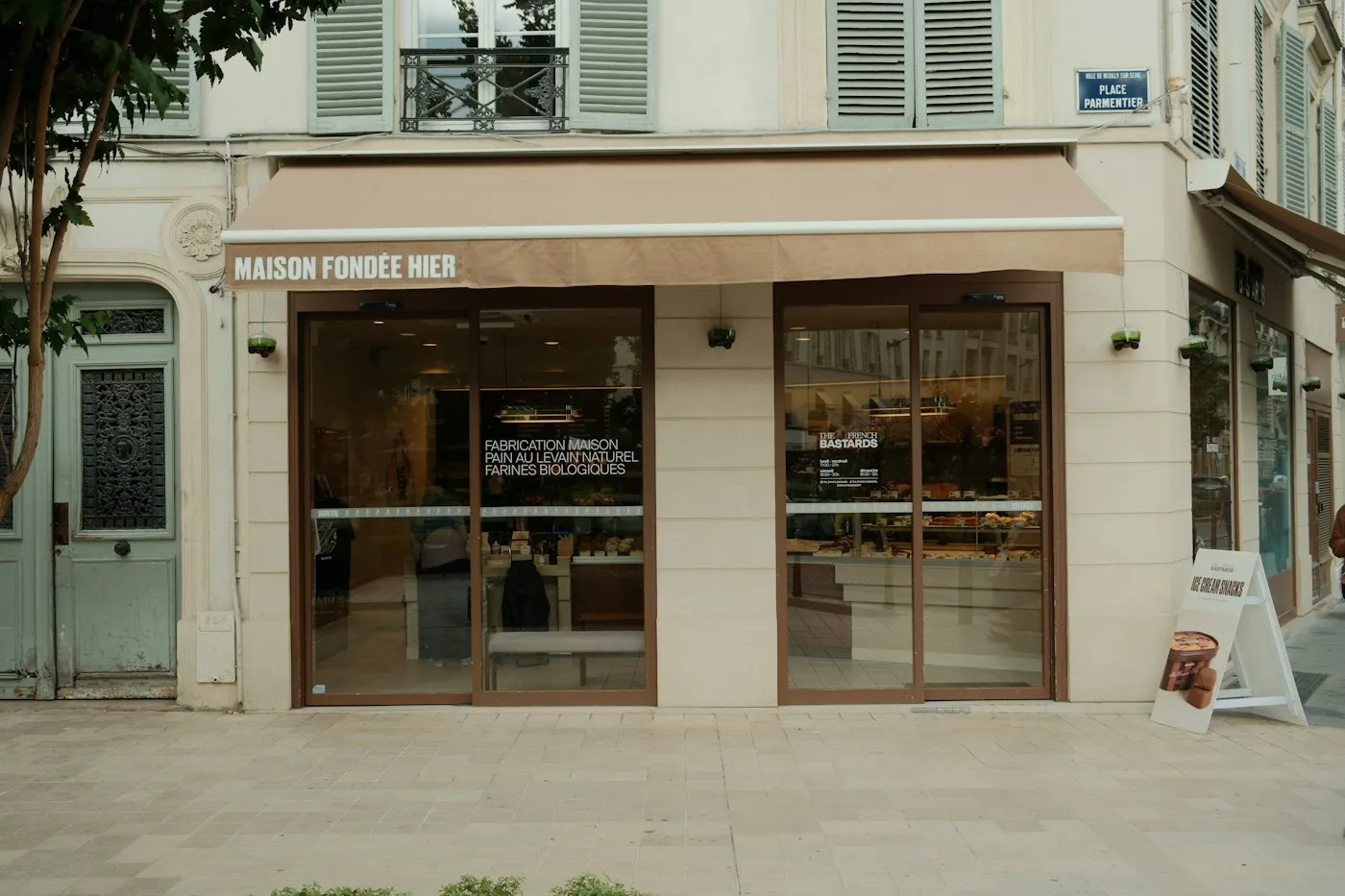
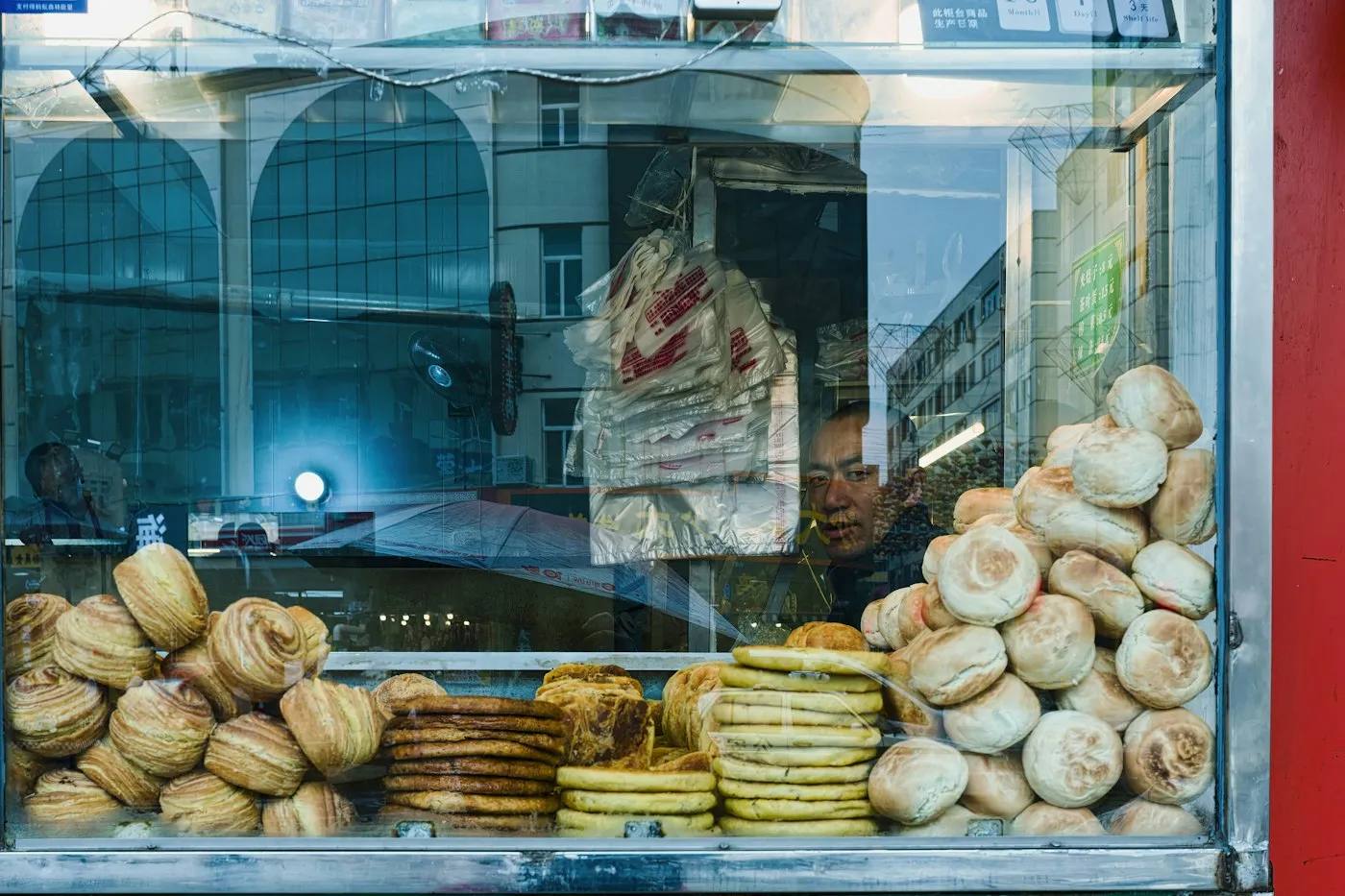
A neighbourhood bakery: not competing on reach, just making the moment count.
A few things that make it work
If you are thinking about trying a playable format, a handful of principles go a long way:
- Make the hidden thing worth finding. The reveal should be your best image or your best offer, not your logo.
- Hint, do not explain. A small moving hand is enough. If you need a sentence of instructions, the idea is too complicated.
- Keep the payoff close. Once the product appears, one clear button. Not three.
- Respect the person. No sound without a tap, nothing that blocks the page, nothing that tricks.
The small pause
Advertising does not have to be a fight for attention. Sometimes it can be closer to that cake under the glass dome: quiet, a little mysterious, and nice enough that you choose to look.
That pause, the moment someone decides to play, is where a brand stops being noise and starts being remembered.
FAQ
Why do interactive ads get noticed when banners do not?
A static banner looks exactly like the thousands of other ads a person has already learned to filter out. An interactive ad asks for a small action instead, and that half-hidden, half-promised reveal is what pulls curiosity past the filter.
Does an ad need to be a game to be interactive?
No. The formats that work best are a single gesture, like a scratch, a flip, a slide or a swipe, not a multi-step game. A real game would add friction, which is the opposite of what makes these formats work.
Is this kind of ad only useful for big brands?
The opposite is usually true. A small local business cannot outspend a national brand on reach, but a single person who stops, plays and remembers the name is worth more to a one-location shop than ten people who scroll past.
What makes a reveal feel satisfying instead of gimmicky?
The thing underneath has to be worth finding, your best image or your best offer, not a logo. The hint also has to stay small: a moving hand or a peeking edge is enough, without a sentence of instructions.
Can interactive ads work without sound or video?
Yes. Most of the formats described here, scratch, flip, slide, swipe, are built on a still image and a touch gesture. Sound should never start without a tap, and none of these formats need it to work.
How Arago helps
Creative is Arago’s set of interactive formats: Scratch, Flip 3D, Reveal, Slider and Carousel, the same gestures described throughout this article. Each one is personalised per viewer with the product, offer and nearest store, and launches together with the DSP at no extra cost: free, no designer, no fee per ad. A local business can try the formats in the showcase before running a single campaign.