
You have a shop. Maybe it is a bakery, maybe a hair salon, maybe a hardware store that has been on the same corner for fifteen years. Someone, perhaps a regular customer, perhaps your cousin who “does marketing”, told you that you should be advertising online. You nodded, and then you closed the laptop and went back to work.
This guide to online advertising for a small business is for the day you open that laptop again. No jargon you need to look up, no assumption that you have a marketing team. Just the handful of decisions that actually matter, in the order you need to make them.
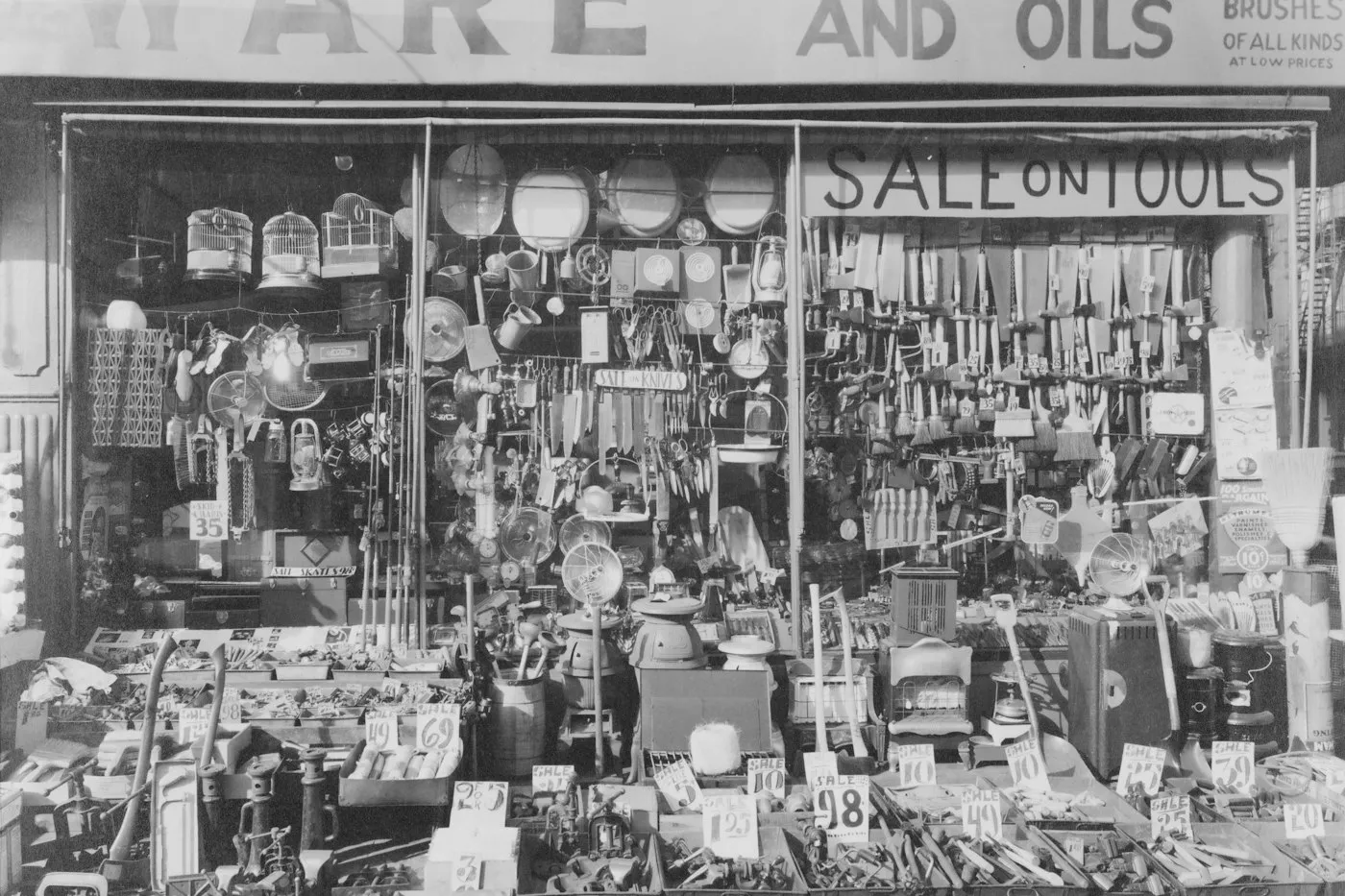
A bakery, a hair salon, a hardware store on the same corner for fifteen years: all three need the same first decision before spending a cent online.
Start with one goal, not five
The biggest mistake is trying to do everything at once: more foot traffic, more brand awareness, more online orders, more followers, all from one small campaign. Pick one.
For most local shops, the honest goal is simple: get more of the right people walking through the door. Not impressions, not likes. People, in your shop, buying something.
Write that goal down in one sentence before you spend a cent. “I want ten more people a week trying our Saturday sourdough” is a goal. “I want to grow our brand” is not, because you will never know if it worked.
A campaign without a written goal is just money with good intentions.
How do you define the right area for your ads?
A shop is not a website. You cannot serve customers from across the country, so there is no reason to advertise to them. The single highest-leverage decision you will make is drawing the boundary of who should ever see your ad.
Think in terms of how far someone will realistically travel, not how far they technically could. A bakery might only matter within a ten-minute walk. A furniture shop might pull people from twenty minutes by car. A specialist, like a bike repair shop, might reasonably draw from across the whole city.
Be honest about this, and be generous only where it is justified. An ad shown to someone forty minutes away, who was never going to drive over for a pastry, is not a wasted impression in some abstract sense. It is money that could have reached someone three streets from your door instead. Our piece on drive-time targeting versus a plain radius goes deeper into why real travel time, not straight-line distance, draws that boundary best.

Your real customers live within a specific distance of your door. Find that distance before you spend anything.
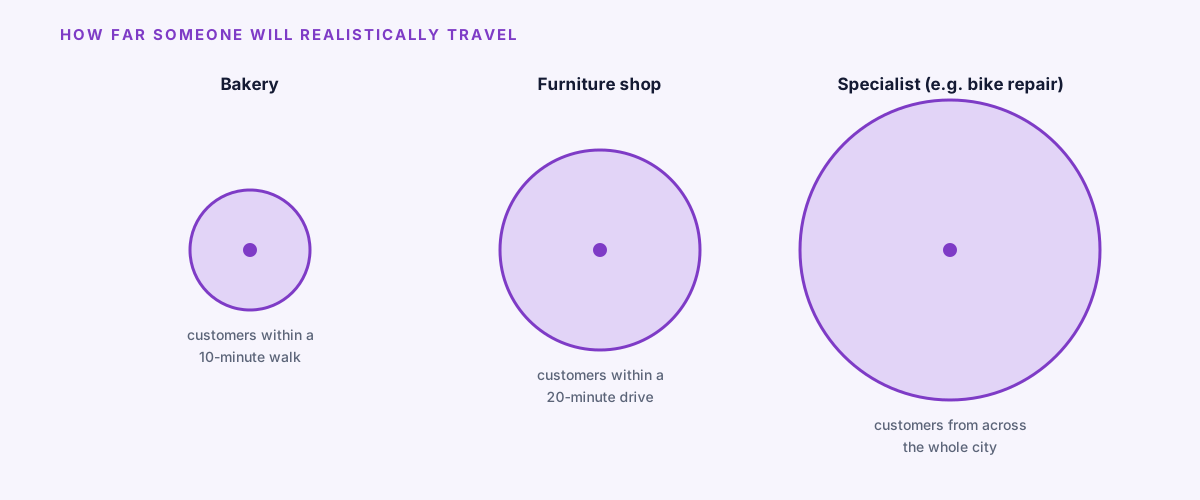
How far someone will realistically travel depends on what you sell, not on how big you wish your map was.
Start small, on purpose
You do not need a big budget to learn whether online advertising works for your shop. You need a small, deliberate test.
Set aside an amount you would be comfortable losing entirely if it taught you nothing: the price of a slow day, not the price of your rent. Run it for two to three weeks. That is long enough to see a pattern, short enough that a false start does not hurt.
The point of this first budget is not to make the campaign profitable on day one. It is to answer a narrower question: does this reach real people in my area, and does a reasonable share of them respond? Once you know that, you can decide whether to spend more, confidently, instead of guessing.
A common trap is the opposite: spending everything on the first week because it feels exciting, then stopping entirely when the results are not perfect by Friday. Treat the first budget as tuition, not as the whole investment.
One good creative beats five mediocre ones
It is tempting to make several versions of your ad: different colours, different offers, different photos, and run them all at once hoping one sticks. For a small first campaign this usually just spreads your small budget thin enough that none of the versions gets a fair chance.
Instead, put your effort into one strong ad:
- One clear photo. The thing you sell, well lit, nothing else competing for attention. A plate of pastries, not a logo.
- One plain message. What it is, and why someone nearby should care today. “Fresh sourdough, baked every morning, five minutes from here” does more work than a clever slogan.
- One clear next step. A name, an address, maybe opening hours. Someone who is interested should immediately know what to do next, which is usually just “come in”.
Curiosity also helps a small ad get noticed in the first place, for the reasons covered in why interactive ads work.
Save the variations for your second campaign, once you have a baseline to compare them against.
What numbers should you actually watch?
You do not need to become a data analyst, but a few numbers will tell you almost everything you need to know.
- How many people saw the ad. This tells you whether your area and budget produced any visibility at all. If this number is close to zero, something is wrong with the setup, not the ad itself.
- How many people clicked or engaged. This tells you whether the ad itself is doing its job. A healthy ad gets noticed by a small but consistent share of the people who see it.
- What it cost you, in total, and per person reached. Not to brag about efficiency, but so the next decision (“spend more”, “change the photo”, “stop”) is based on a real number instead of a feeling.
Check these once a week, not once an hour. Daily swings in small local campaigns are mostly noise. A weekly look tells you the actual trend.
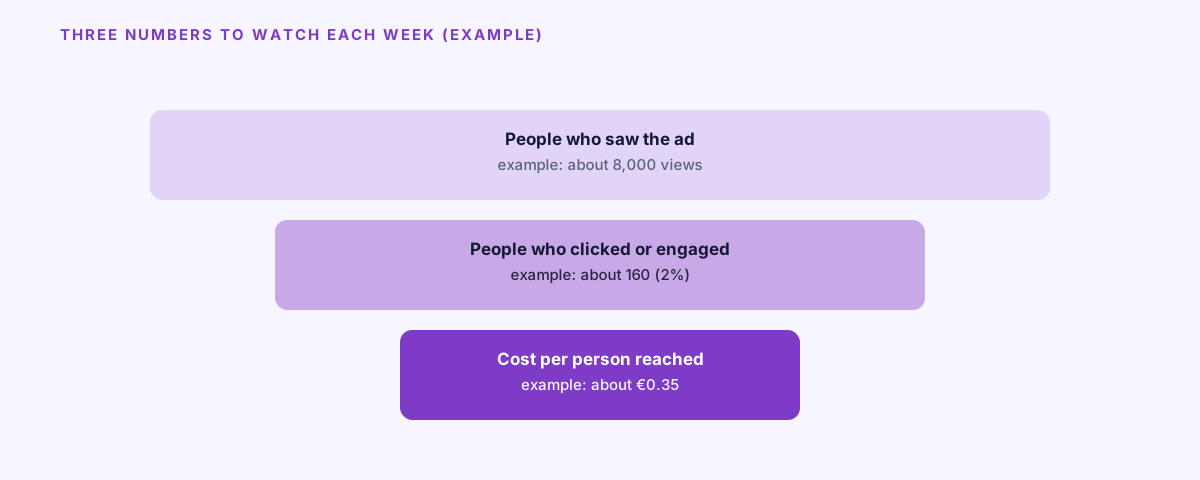
Three numbers, checked weekly, example figures only: how many saw it, how many reacted, and what each person reached actually cost.
Common mistakes worth naming
A few patterns show up again and again with first-time local advertisers, and naming them in advance saves you from most of them.
Targeting too wide, out of fear of missing someone. It feels safer to include a bigger area, but it rarely is. A wider area with the same budget just means fewer impressions reach the people who could actually walk in, the same trade-off covered in our guide to geotargeting for local retail.
Changing everything after three days. Early results are noisy. Give a campaign the full test period before judging it, unless something is obviously broken, like the wrong address or a dead link.
No clear next step for the viewer. An ad that looks nice but never says where you are or what to do leaves the interested viewer with nothing to act on.
Treating the first campaign as a verdict. One small test with one creative and one audience tells you about that specific combination, not about “whether online advertising works for my business”. Learn from it, adjust one thing, and run it again.
Forgetting the shop itself. No ad fixes a confusing storefront, unclear opening hours online, or a phone number that goes unanswered. Advertising brings people to the door. What happens after that is still on you, and it is usually the easier half.
A small, deliberate first step
None of this requires a marketing degree or a big budget. It requires a written goal, an honest map of who your real customers are, a budget you can afford to learn from, one clear ad, and a weekly glance at a few simple numbers.
Get the goal, the area, the budget and the creative right, and the rest is details.
FAQ
How much should a small business spend on its first online ad campaign?
Start with an amount you would be comfortable losing entirely, roughly the cost of a slow day rather than your rent, run for two to three weeks. The goal of this first budget is to learn whether the setup reaches real people, not to be profitable on day one.
Should a local shop target a radius or the whole city?
Neither, strictly. The honest target is the area people will realistically travel from for what you sell, a ten-minute walk for a bakery, twenty minutes by car for a furniture shop. Going wider than that with the same budget just spreads it thinner.
How many ad versions should a first campaign run?
One. Running several versions at once with a small budget usually means none of them gets enough exposure to tell you anything. Save variations for a second campaign, once you have a result to compare them against.
How often should I check my campaign’s numbers?
Weekly. Daily swings in a small local campaign are mostly noise, and judging a campaign before its test period ends usually leads to stopping something that just needed more time.
Can online advertising fix a weak storefront or unclear opening hours?
No. Advertising brings people to the door. What happens once they get there, a clear storefront, accurate hours, a phone that gets answered, is still on the business, and it is usually the easier half to fix.
How Arago helps
Arago is free and self-serve: no contract, no minimum spend, you only fund the campaign itself. The area from the section above becomes a real drive-time zone in Map, measured in actual driving time rather than a guess. Creative formats launch with the DSP at no extra cost, so the “one good creative” from this guide does not need a design fee. Pricing lists everything included from the first campaign.