You open a grocery app to reorder the usual: milk, eggs, the cereal your kid will actually eat. Between the cereal you always buy and the one a shelf over, there is a small banner for a brand you have never tried. It looks like part of the shop. It is, in fact, an ad, sold by the retailer, to a brand that paid specifically to sit in front of you at this exact moment, inside your own shopping list.
That banner is retail media, bought through what’s called a retail media network, and the business behind it has grown into one of the fastest-moving corners of advertising.
What is a retail media network?
A retail media network is an advertising platform built, owned and sold by a retailer. The retailer is no longer just a place where products get bought. It is also a place where brands pay to be seen, the same way a magazine sells a page or a website sells a banner slot.
What makes a retailer’s ad inventory valuable is not the traffic alone. Plenty of websites have traffic. What a retailer has that most publishers do not is a direct line from “this person saw the ad” to “this person bought something.” It knows what you browse, what you add to a cart, and what you actually buy. That is enough to build audience segments far more specific than almost anything built from third-party data.
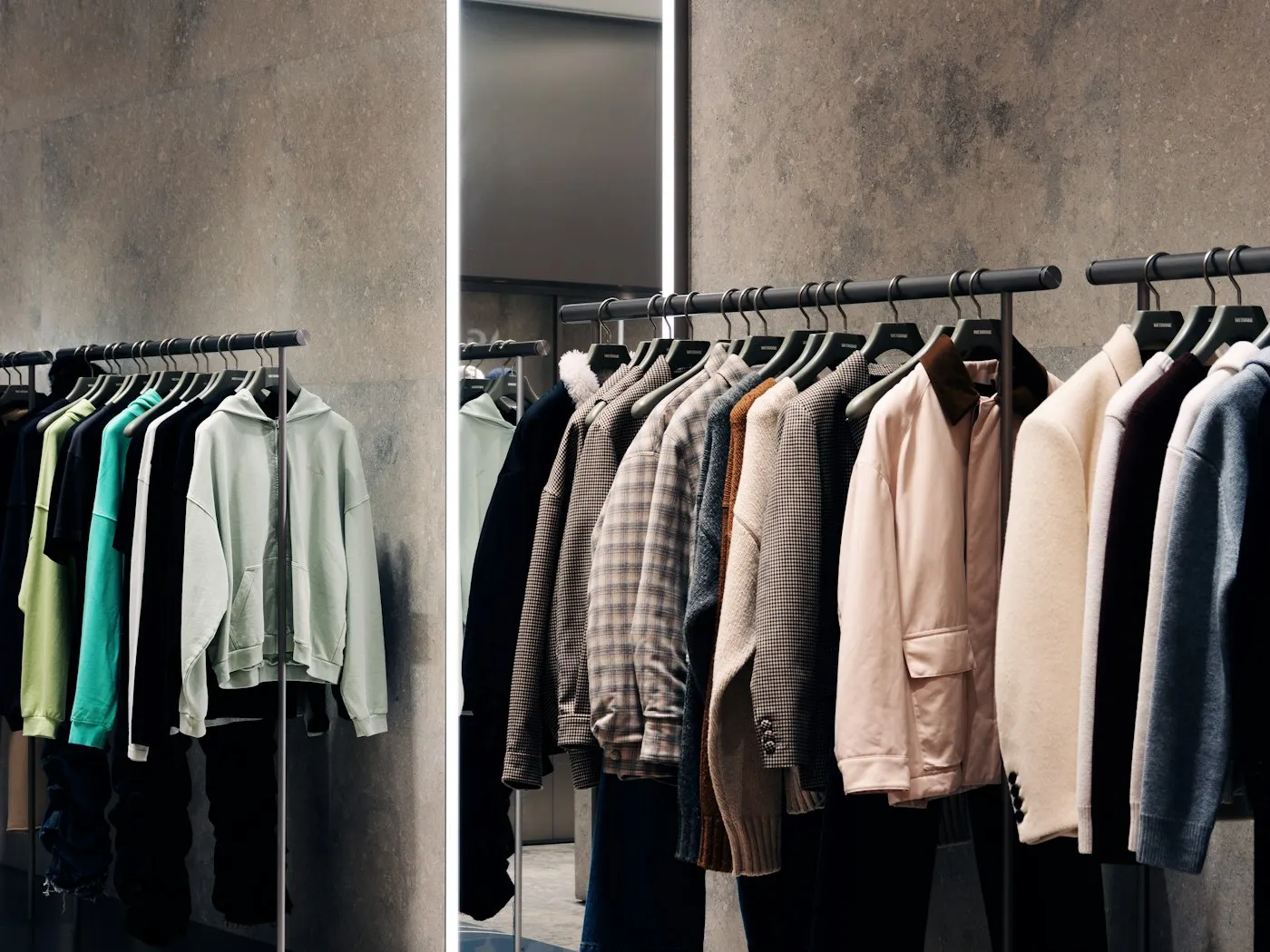
The store is still a store. It has also become a place where brands buy visibility.
Where do the ads run, on-site or off-site?
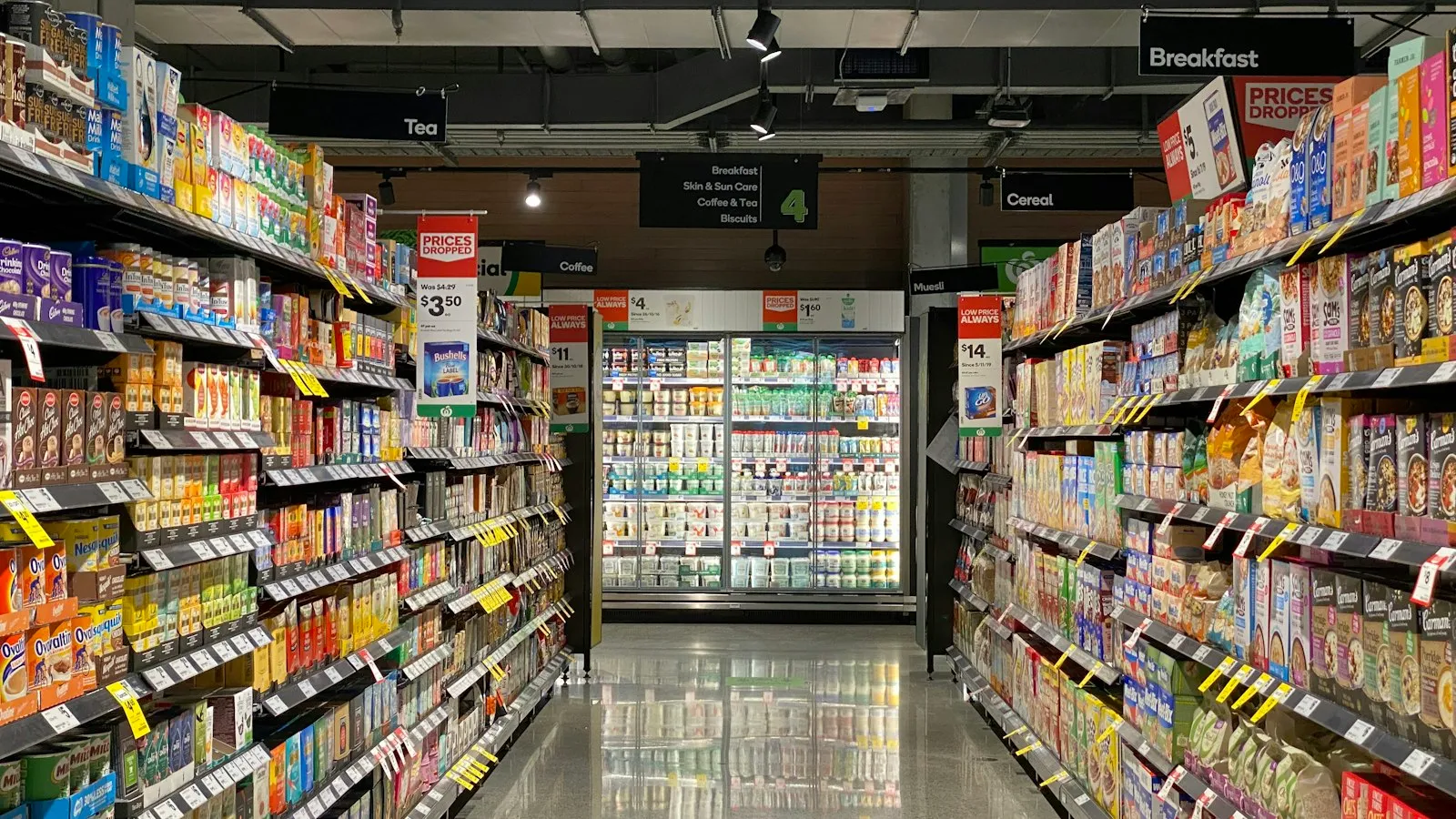
The simplest retail media placements live where you would expect: inside the retailer’s own website and app. A sponsored product sits a little higher in the search results. A banner runs on a category page. The homepage gets taken over for a launch week. Some retailers extend this into the physical store, with digital screens near the shelf, sometimes labeled “in-store retail media” to distinguish it from the digital version.
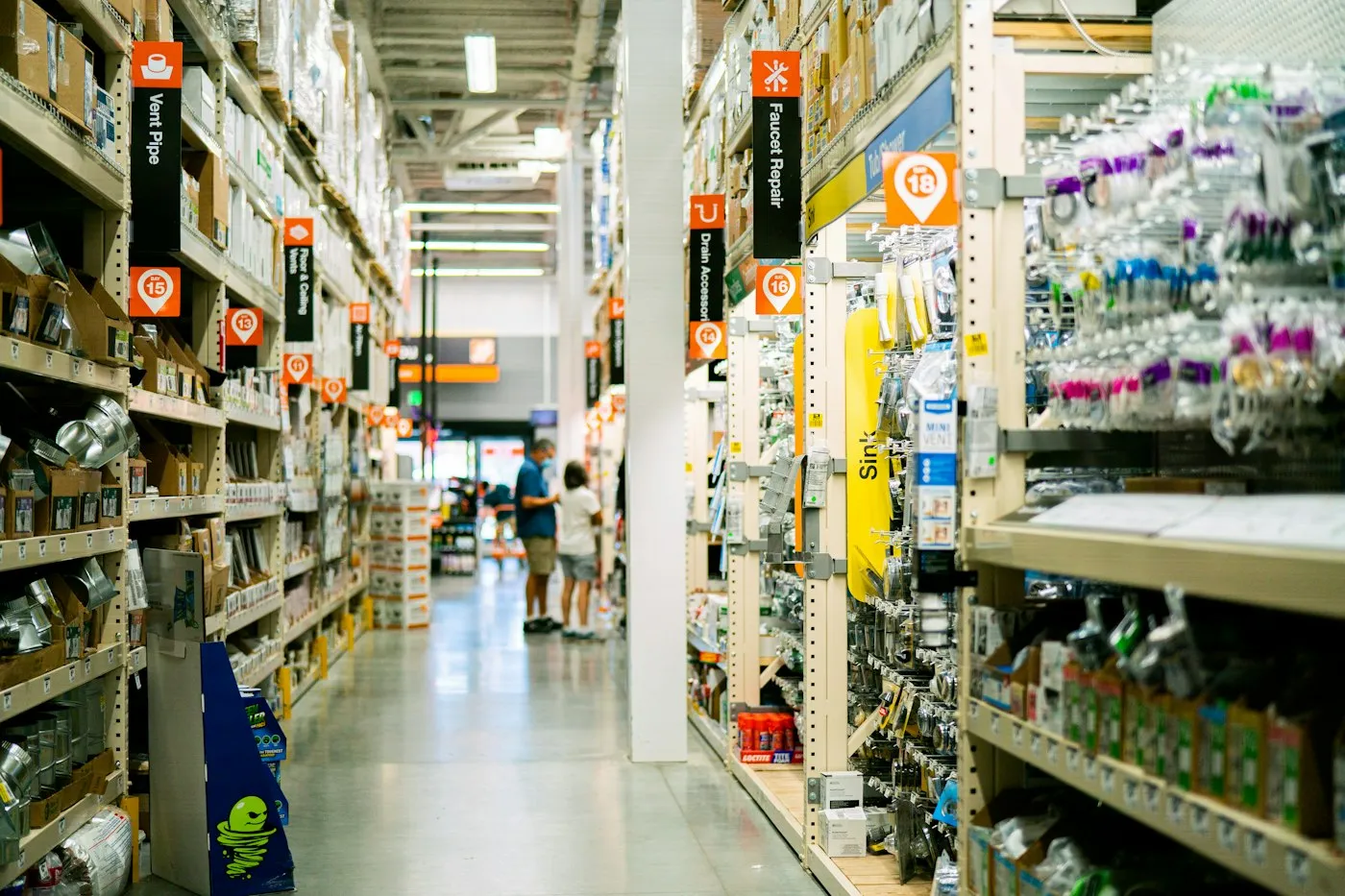
Wayfinding signage and numbered aisles: the same shelf space that now carries sponsored placements and in-store screens.
The more interesting move, and the newer one, is off-site. Retailers increasingly take their shopper data outside their own four walls and use it to target programmatic display, video, connected TV and streaming audio elsewhere on the internet. Some of this runs through data clean rooms, controlled environments where a retailer’s purchase data and a platform’s audience data can be matched without either side handing over raw files. The pitch to a brand is straightforward: reach people with proven purchase behavior, on channels with far more reach than the retailer’s own site could ever offer.
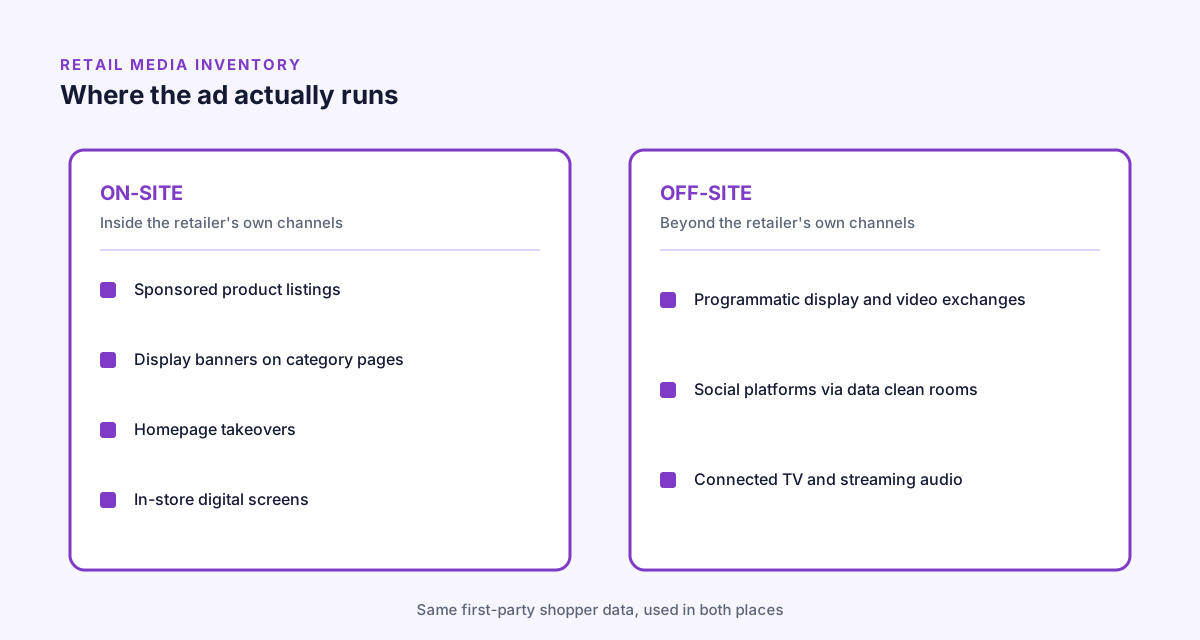
On-site stays inside the retailer’s own channels. Off-site takes the same shopper data out to display, video and CTV elsewhere.
Why does retail media make brands pay attention?
Every advertiser’s oldest complaint is the gap between an ad and a sale. A click is not a purchase. A view is not even a click. Retail media closes that gap in a way almost no other channel can, because the same company placed the ad and rang up the transaction.
That closed-loop measurement lets a brand compare the purchase behavior of people who saw a campaign against people who did not, or track whether the average basket got bigger among shoppers who were exposed to it.
The retailer controls the ad and the till. That is the whole pitch, in one sentence.
The rigorous version of this is incrementality testing: isolating how much of that lift actually came from the ad, rather than purchases that would have happened regardless. It is widely considered the right way to measure retail media. It is also not something every network actually offers.
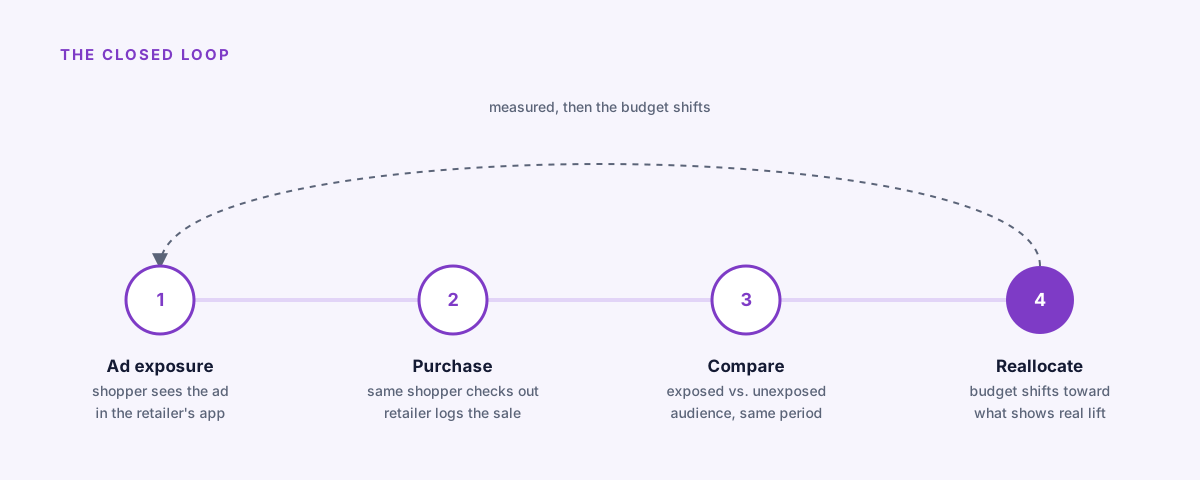
The loop that makes retail media different: the same company owns the ad exposure and the receipt.
Where does the friction show up?
None of this is as tidy as the pitch decks suggest. A brand running campaigns across several retail media networks is running several different platforms, each with its own dashboard, its own reporting definitions and its own targeting logic. There is no single view across all of them.
Retailers also guard their data closely, for understandable reasons, which means it rarely leaves their walls in a form a brand can match against its own systems without a formal clean room arrangement. And the biggest networks, the ones with the most reach, often come with entry costs that quietly exclude smaller or regional advertisers: minimum spend requirements that assume a national marketing budget.
That combination, high value for brands that can afford to be there, real friction for brands that cannot, is the most honest description of retail media today.
What’s the opening for local retail?
Most of the retail media conversation so far has been about large national chains with the scale to build their own ad platforms. But the same logic, a retailer’s own channels, known shoppers, purchase-relevant moments, applies just as well to a regional grocery chain, a pharmacy group or a specialty retailer that will never build its own ad tech stack. That is a real audience, currently underserved, made up of local advertisers who want to reach in-market shoppers without the infrastructure a national RMN requires, the same gap covered in running one campaign across a whole network.
FAQ
What’s the difference between on-site and off-site retail media?
On-site retail media runs inside the retailer’s own website, app and in-store screens. Off-site extends the same shopper data to programmatic display, video, connected TV and streaming audio elsewhere on the internet.
How is retail media measured?
Retailers compare the purchase behavior of people exposed to a campaign against a control group who were not, since the same company owns both the ad and the till. The more rigorous version, incrementality testing, isolates how much of that lift the ad actually caused.
Can a small or regional retailer build its own retail media network?
Building the ad tech, data clean rooms and sales team a full retail media network needs takes resources most regional retailers do not have. A programmatic DSP with location-based targeting reaches the same channels without that build.
What data does a retail media network use to target ads?
It uses what the retailer already knows: browsing history on its own site and app, what shoppers add to a cart, and what they actually buy, which builds audience segments far more specific than most third-party data.
How Arago helps
Arago gives local retailers and the brands advertising through them a way into programmatic advertising, retail media included, without an enterprise budget or an in-house adtech team. The DSP buys across the open internet in real time, and Map builds targeting around real drive-time zones rather than a guessed radius, the approach covered in geo-targeting for local retail. Every location gets its own line item: a place, a budget and an ad, the same pattern laid out in one line item per store, which is exactly the granularity a multi-store retailer needs to run something that looks and performs like its own media network. It is free to use, with no contract and no minimum spend, so the budget threshold that keeps smaller advertisers out of the big networks simply does not apply here.