A sporting goods chain runs a spring promotion across 200 stores. The marketing team has a corporate budget, a corporate creative, and a corporate deadline. What it does not have is 200 identical markets. The flagship store downtown competes with three other sporting goods shops within walking distance. The store in the mid-sized regional town barely has a direct competitor at all. A single national campaign flattens that difference. 200 separately managed local campaigns would flatten the team running it.
This is the tension at the center of local advertising for any network bigger than a handful of locations: the budget and the infrastructure live at the corporate level, but every market underneath it is genuinely different.
What actually changes between a city and a town?
It is not just a matter of taste. The inventory a DSP can actually buy differs by market: a dense urban area has more publishers, more competing bidders, and different pricing than a mid-sized regional town. Seasonal patterns differ too. Consumer behavior shifts by time of day and day of week in ways that are not the same everywhere: a bakery chain might see its Saturday morning rush in the suburbs and its weekday lunch rush downtown, and a campaign scheduled identically in both places is wrong in at least one of them.
Solving for this requires an architecture that can run at national scale while still behaving differently, store by store.
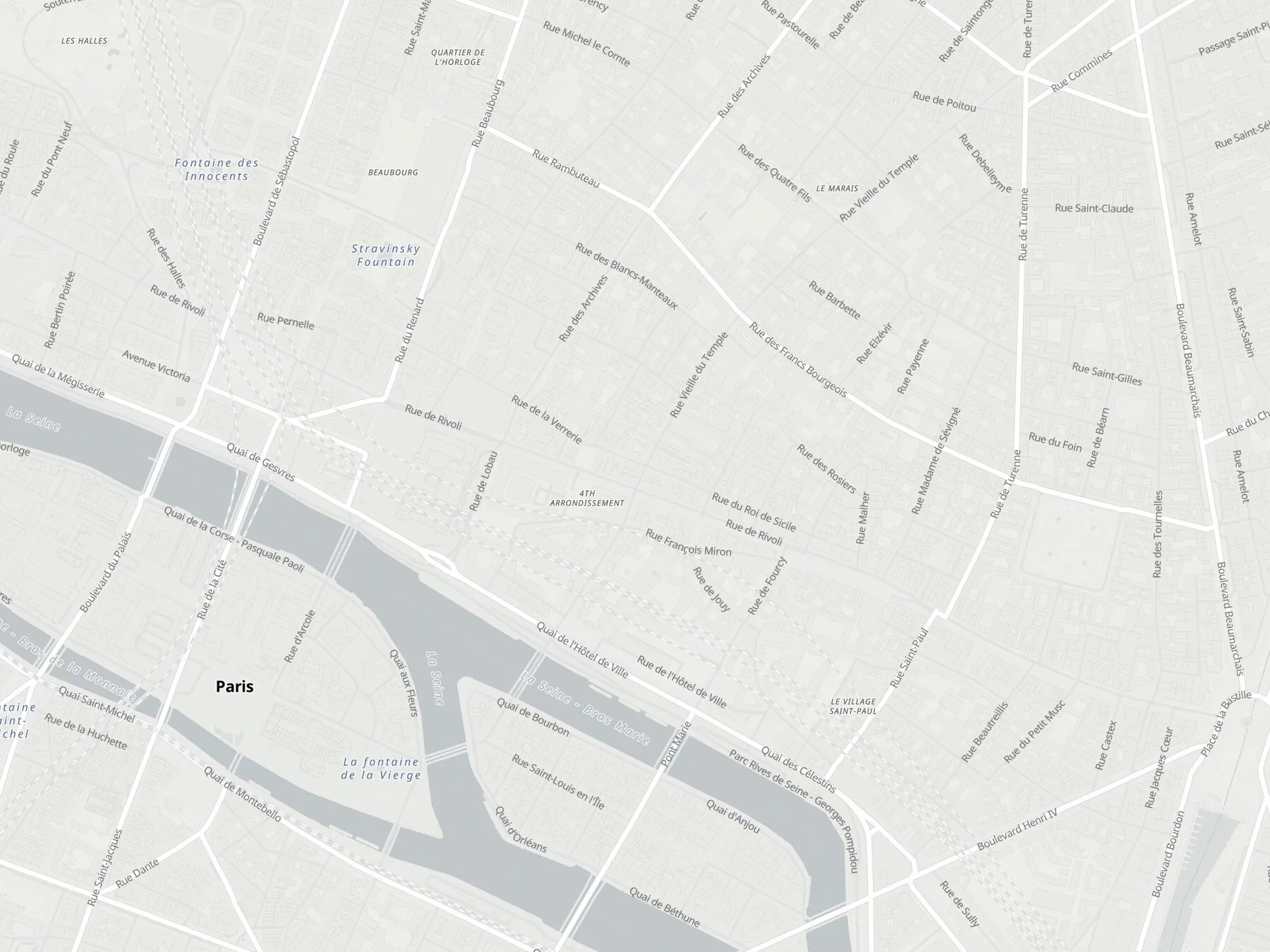
Zoom into any one neighborhood and the map stops looking like the rest of the city. Campaigns need to do the same.
What architecture makes local advertising at scale work?
Geo-targeting and geo-fencing give each location its own defined area, a radius around the store or a trigger that fires when someone enters or leaves a specific place, whether that is the store itself, a competitor, or a shopping center nearby. This is what lets a single campaign template get replicated across hundreds of locations, each one targeting its own patch of ground, drawn with the same drive-time logic covered in geo-targeting for local retail.
Dynamic creative optimization keeps the production side sane. Instead of designing hundreds of individual ads, the team builds one master template and lets the system fill in the local details automatically: the store address, local pricing, a promotion that only applies in that market, the same mechanics covered in dynamic creative optimization.
Local scheduling lets each store’s campaign run on its own clock, matching whatever traffic pattern that specific location actually has instead of a single corporate-wide schedule.
Localized audience segments add first-party signals, loyalty members, past purchasers, email subscribers, segmented by location, so a store opening in a new market can target lookalikes built from existing customers at similar stores rather than starting from nothing.
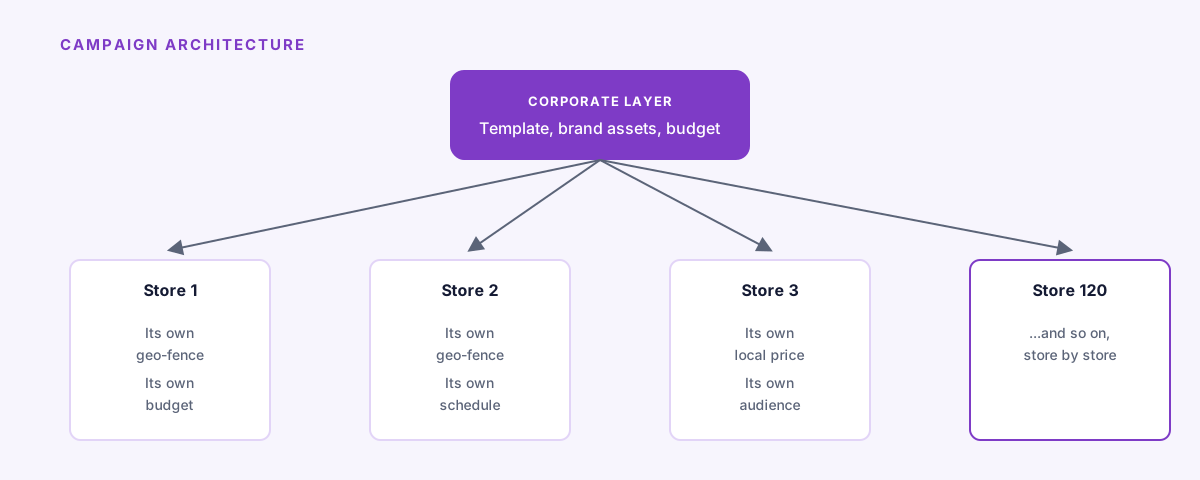
One template at the top, hundreds of location-level line items underneath, each one targeting its own geography and schedule.
Budget is not one divided by store count
Splitting the budget evenly across every location is the easiest math and usually the wrong answer. A high-traffic urban flagship, a brand-new store trying to establish itself, and a location facing an aggressive new competitor all have a legitimate claim to more than an equal share.
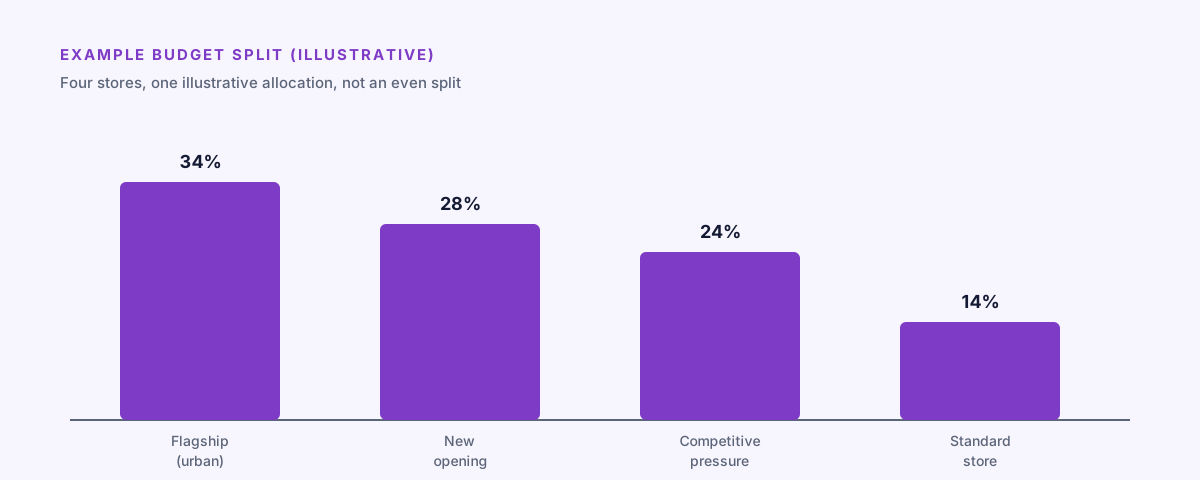
An illustrative split, not a rule: a flagship, a new opening and a store under pressure can all justify more than an even share.
The more sophisticated version of this uses historical performance, external market sizing, and the specific goal of the campaign to set a budget per location, and some platforms will shift spend automatically toward whichever locations are showing the strongest real-time signal.
How do you measure something that happens in a store, not a browser?
Attribution in local retail is genuinely harder than in most other channels, because the outcome that matters, someone walking into a store and buying something, rarely leaves a digital trail back to the ad that caused it.
You cannot click your way into a store. The ad has to be measured by what happens after the screen goes dark.
Store visit measurement tools estimate how many of those visits can reasonably be attributed to people exposed to a campaign, using mobile location data and statistical modeling. It is approximate, not exact, but it gives a real directional read where click-level attribution simply does not exist. Local brands can also look for correlation between ad activity and store-level revenue or transaction data, even without attributing any individual click.
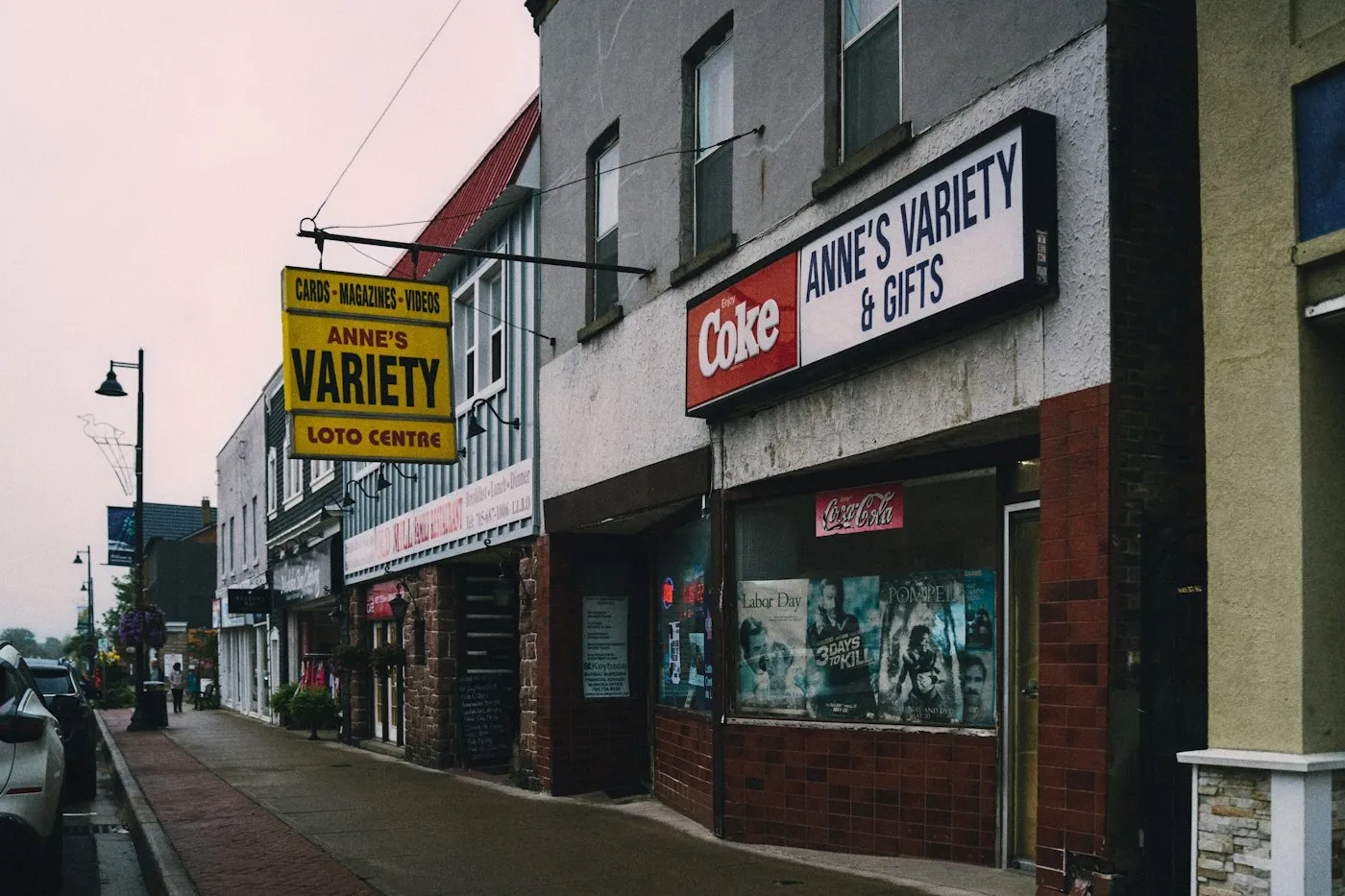
Every storefront in a network has its own foot traffic pattern, its own competitors, its own version of this campaign.
How do you keep the brand in one piece across hundreds of stores?
The other failure mode in multi-location advertising is the opposite problem: once individual stores or regional teams start running their own ad activity, brand guidelines drift, messages start to conflict, and reporting fragments into pieces nobody can add back together. The fix is giving corporate teams control over templates, assets and compliance rules, while letting local teams adjust what is actually local, a headline, a store address, within those guardrails.
FAQ
What is local advertising at scale?
It is running one marketing budget and brand across many physical locations while letting the targeting, creative, schedule and budget behave differently for each store’s own market.
How many stores need this kind of architecture?
Any network bigger than a handful of locations. A brand with 3 stores can share one campaign for a while, but the gap between a flagship and a quiet neighborhood shop only grows as more stores are added.
Should every store get the same ad budget?
No. A high-traffic flagship, a new opening trying to establish itself, and a store facing a new competitor each have a legitimate claim to more than an equal share of the budget.
How is store visit attribution measured?
Store visit measurement tools estimate how many visits can reasonably be attributed to people exposed to a campaign, using mobile location data and statistical modeling. It is approximate, but it is the closest read available without a digital trail.
How Arago helps
Arago is built around exactly this unit: one line item per location, meaning a place, a budget and an ad, all in one record. Add them by the hundred, paste them in from a spreadsheet, or import zones as GeoJSON through Map. A retailer running 120 stores can bulk create, duplicate, edit and pause these line items from a single account, each with its own DSP budget and its own reporting by store, creative and ad size, the same foundation that lets a local chain run something that looks like its own retail media network without an enterprise budget. See the pattern in practice in one line item per store.