You open a news site to check the weather. Before the page has even finished loading, something like ten different companies have already talked to each other about the empty rectangle near the top of the article, the one about to carry an ad.
None of this takes longer than the blink of an eye. It also involves far more separate businesses than most people assume.
A chain, not a single company
Nobody designed the adtech ecosystem as one product. It grew, piece by piece, as advertisers and publishers each solved a narrow problem: how to find each other, how to price an impression, how to prove the ad actually showed up on a real screen. The result is a chain of specialized companies, each one handling a single link.
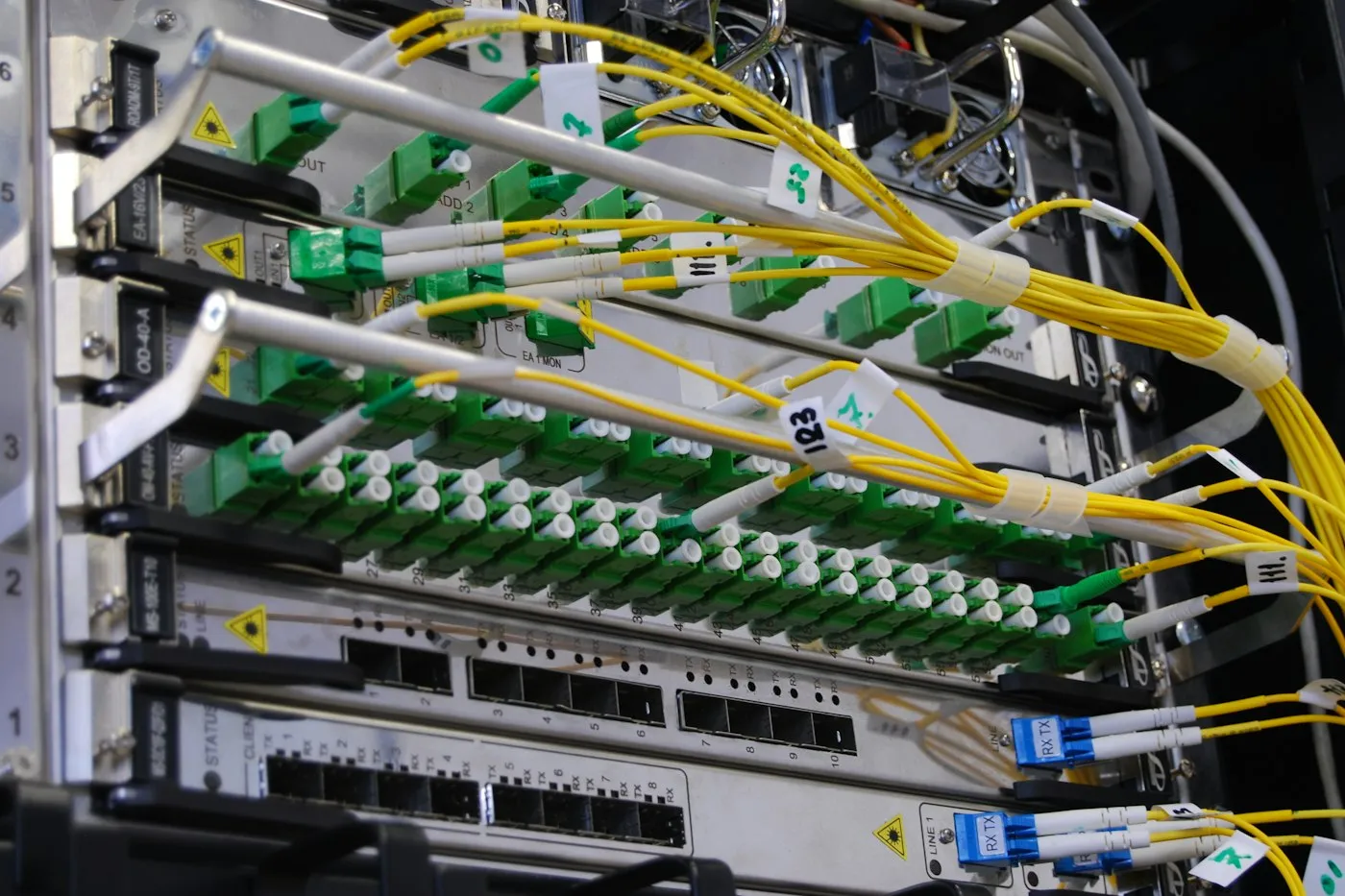
At one end sit the advertisers, the brands and local businesses who want to reach people. At the other end sit the publishers, the websites, apps and streaming services that own the space where ads can appear. Everything in between exists to connect those two sides fast enough, and fairly enough, for both to keep using it.
Who actually does what
Advertisers rarely buy ad space directly from a website. Instead, they use a demand-side platform, or DSP, that lets them bid on inventory across many publishers from one interface. On the other side, publishers use a supply-side platform, or SSP, to offer their unsold space to many buyers at once and run an auction for every impression.
The two meet at an ad exchange, the marketplace where bids and inventory actually collide. A handful of other specialists complete the picture, each solving one narrow problem so the DSP and SSP do not have to:
- Ad servers store the creative and deliver the right file to the right placement at the right moment.
- Verification vendors check that an ad was visible, in a safe environment, and not served to a bot.
- DMPs and CDPs turn raw audience signals into segments a DSP can target, the difference covered in CDP vs DMP.
None of these companies interact with the end viewer directly. Their job is to make sure that by the time an ad reaches a screen, someone has already checked that it is paid for, visible and in the right place.
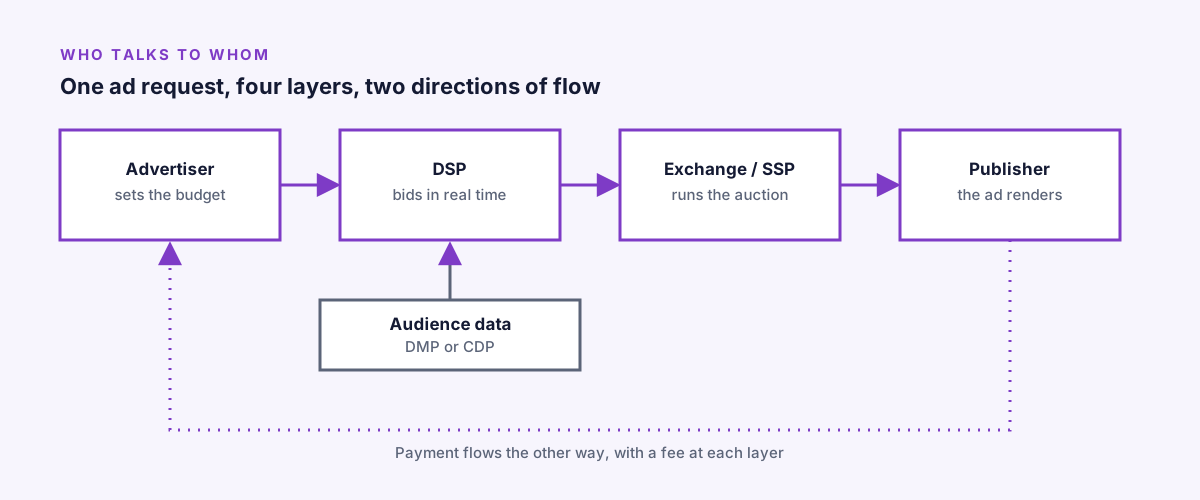
One ad request passes through four layers. The ad and the bid travel one way, the payment travels back the other way, with a fee taken at each layer.
The diagram above is the whole business model in one picture. An advertiser sets a budget in a DSP. A visitor loads a publisher’s page, which triggers an auction run by the exchange or SSP. The DSP checks the advertiser’s rules, decides whether to bid and how much, and the auction clears, often in under 100 milliseconds. Audience data, whether from a DMP or a CDP, feeds into that bidding decision so the DSP knows which impressions are worth more. Money then flows back through the same chain, publisher to exchange to DSP to advertiser’s budget, with a small fee taken at every layer.
A DSP does not sell ads. It buys them, on someone else’s behalf, one impression at a time, thousands of times a second.
Open web vs. walled gardens
Not all inventory lives in this open chain. A large share of digital ad spend goes to walled gardens: closed ecosystems, typically the major social and search platforms, that control their own inventory, their own audience data and their own measurement, all inside one company.
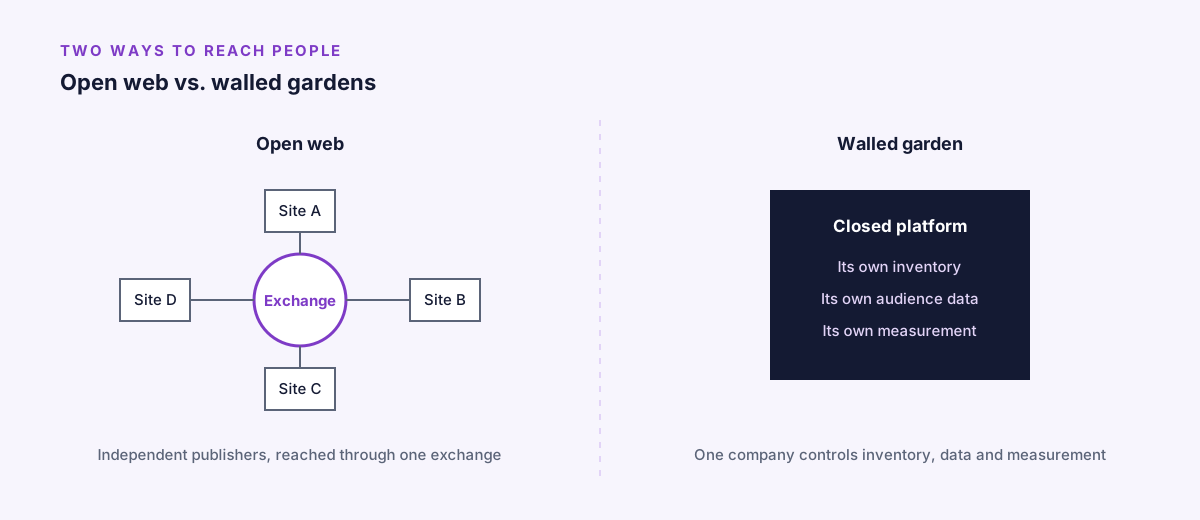
On the open web, one exchange connects many independent sites. In a walled garden, one company controls the whole stack.
Neither model is simply better. A walled garden offers scale and a tightly controlled experience, but an advertiser has to trust its numbers, since nobody outside the platform can check them. The open web is more fragmented, but it is also more transparent: independent measurement tools can verify what was shown, to whom, and whether anyone actually saw it.
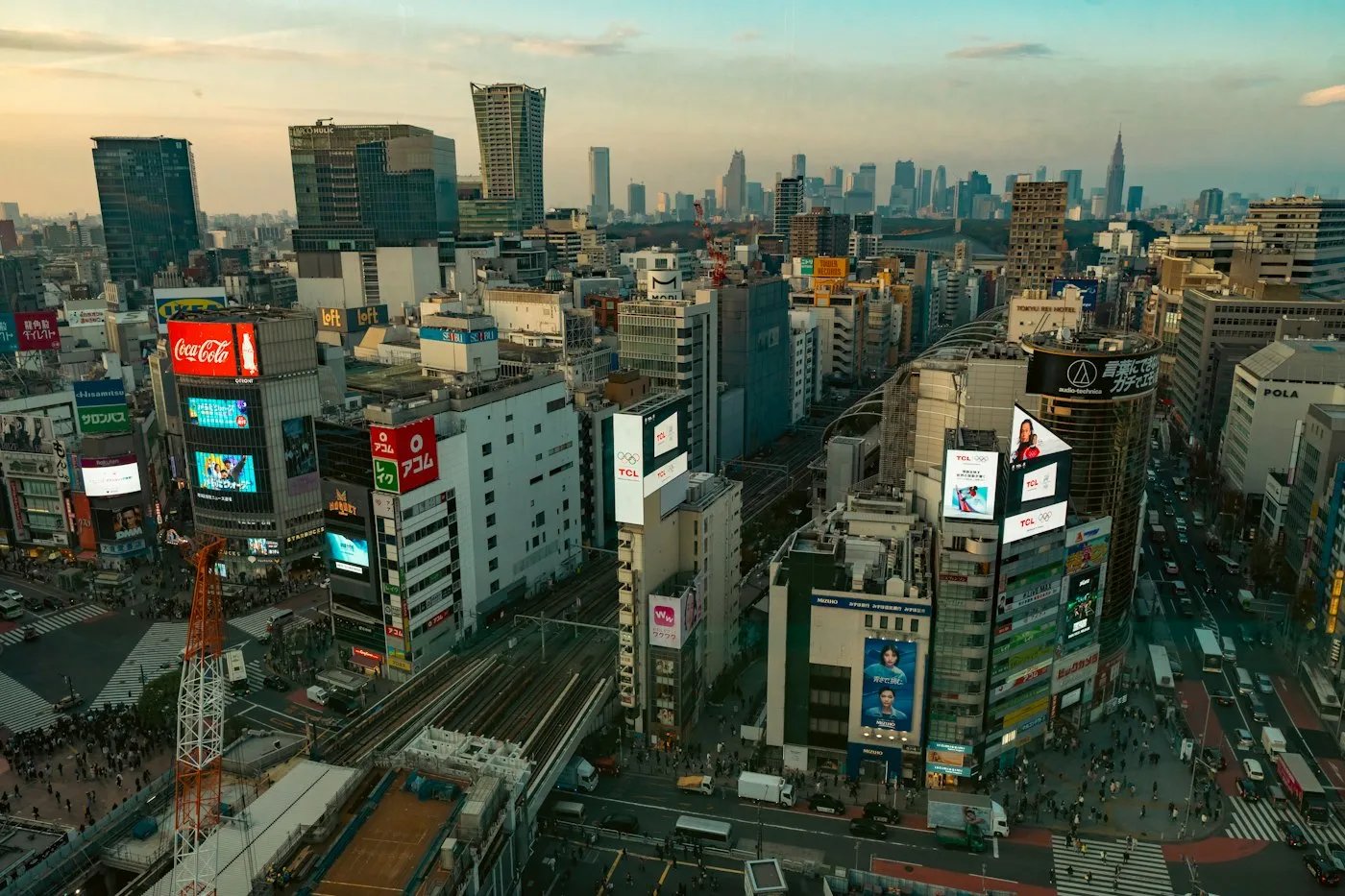
Every one of these screens, websites and apps is a separate piece of open-web inventory, reachable through the same chain of exchanges and SSPs.
Why it feels overwhelming for a local business
For a long time, this entire chain was built for national and global budgets. Accessing it required a trading desk, a media agency, or enough spend to justify the learning curve. A neighbourhood bakery or a regional retailer had no practical way in.
Self-serve DSPs have changed that part of the picture. They still sit inside the same chain described above, the same exchanges, the same auctions, the same open internet, but they package the complexity into an interface a small business can run on its own, without a trading desk standing between them and the auction.
FAQ
What is the difference between a DSP and an SSP?
A DSP lets an advertiser bid on inventory across many publishers from one interface. An SSP lets a publisher offer unsold space to many buyers and run an auction for each impression.
Where does an ad exchange fit into the chain?
It is the marketplace where the DSP’s bids and the SSP’s inventory actually meet and clear, often in under 100 milliseconds.
Are walled gardens part of the adtech ecosystem?
They sit apart from the open chain of exchanges and SSPs. A walled garden controls its own inventory, data and measurement inside one company instead.
Can a small business access this ecosystem without an agency?
Yes. Self-serve DSPs package the same exchanges and auctions into an interface a local business can run on its own, without a trading desk.
How Arago helps
Arago gives a local business one self-serve entry point into that chain, instead of a dozen specialized tools to learn. Its DSP buys directly on the open internet through real-time bidding over OpenRTB, across websites and mobile apps, checking your rules on zone, allowed sites and budget before every bid.
Arago itself is free and open: the DSP, the Map tool for drawing where you want to advertise, and the Creative tool for building the ad all come included, with no contract and no minimum spend. You only ever fund the campaigns themselves, which means the cost of understanding the adtech ecosystem is no longer the price of entry.
Start by exploring the DSP, draw your first zones in Map, or see what an ad can look like in Creative.